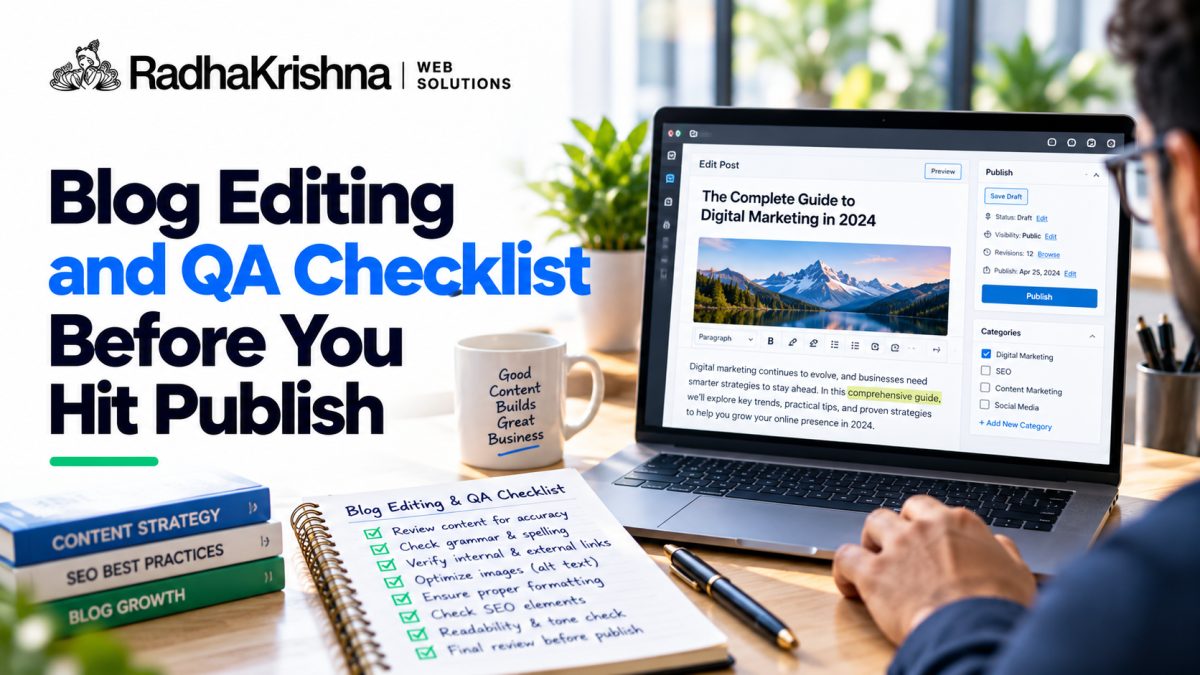
Publishing in a hurry often leads to spelling mistakes, weak structure, or outdated facts that reduce trust. Before you publish, review your process so editing supports indexing, clicks, and steady enquiries. Our Google Search Console guide for small business shows which pages deserve the most careful review.
Why Editing Matters More for Small Business Blogs
Large brands can recover from a weak article because they have hundreds of pages. A small business in Pune or Vadodara with twenty blogs cannot afford that. Each post represents your shop, clinic, or service on Google. If it has broken English, confusing steps, or wrong pricing, visitors may leave and choose a competitor who sounds more careful and reliable.
Good editing is not about perfect grammar alone. It is about clarity, honesty, and usefulness. Does the intro answer the reader question quickly? Are headings logical? Is the next step obvious? When editing is paired with strong SEO services basics like internal linking and clean titles, your blogs stay helpful for months and keep bringing repeat visits and calls.
Readability Check: Make Every Post Easy to Scan
Most readers in India scan on mobile before reading fully. Use short paragraphs, simple words, and clear headings. Keep sentences under twenty words where possible. Break long explanations into bullets. Read the draft aloud once. If you pause or feel confused, your reader will too. Replace complex phrases with plain alternatives that a first-time buyer can follow.
- Check title and intro promise the same answer the article delivers.
- Keep paragraphs to two to three lines for easy mobile reading.
- Use one idea per heading and keep heading order logical.
- Replace jargon with simple Indian English and local examples.
- Add a short summary or takeaway at the end of long sections.
Also check your tone. SMB blogs should sound helpful and respectful, not overly salesy. Instead of saying we are the best, show timings, process steps, documents required, or care tips. This practical style works well for doctors, tuition classes, real estate agents, and service firms across Maharashtra and Gujarat.
Duplication and Originality Check Before Publishing
Duplication is common when teams reuse old brochures or copy supplier descriptions. Google may ignore pages that add no new value, and readers lose trust. Every blog should add your own experience, local context, or clear steps. Even if the topic is common, your examples from Baner, Hadapsar, or Fatehgunj make it original and useful.
| QA Area | What to Check | Quick Fix |
|---|---|---|
| Internal duplication | Similar paragraphs on service pages | Rewrite with fresh angle and link instead |
| External similarity | Copied supplier or AI draft phrases | Add local steps and personal experience |
| Thin sections | Headings with one vague line | Expand with example, cost range, or FAQ |
| Image and alt text | Stock images without context | Add helpful alt and compress images |
Run a quick internal check by searching your site for the main phrase. If three pages say the same thing, merge or differentiate them. Keep one strong page per question. Link related posts together so readers can go deeper without reading repeated content. This simple habit supports your wider digital marketing calendar and keeps messaging consistent.
Factual and Local Accuracy Check for Indian SMBs
Factual errors damage enquiries faster than grammar mistakes. Always verify prices, timings, addresses, phone numbers, government rules, and process steps. If you mention GST, RERA, visa rules, or medical advice, confirm the current position and add a note to review yearly. Do not guess dates, fees, or eligibility conditions.
- Verify business name, address, phone, and working hours in the content and CTA.
- Confirm any mention of costs, discounts, or timelines with the owner or accounts team.
- Check external links open correctly and point to trusted, current pages.
- Confirm local references like areas, landmarks, and delivery zones are accurate.
- Add author name and last reviewed date for trust on important topics.
If your team uses templates or AI drafts, keep a human review step for facts. Tools can improve language, but only your team knows the real shop timings in Vadodara or the actual site visit process in Pune. Many SMBs now use automation services for checklists and approvals, but final factual sign-off should always be done by a person who knows the business.
Final Pre-Publish QA: Links, SEO Basics, and CTA
Before hitting publish, do a five-minute technical pass. Check that the slug is short, the title is clear, and one main internal link points to a relevant service page. Ensure images load fast on mobile and have simple alt text. Test all buttons and forms on phone, because most SMB enquiries in India come from mobile search and WhatsApp clicks.
End every post with one clear next step. Do not add three different offers in one article. For a clinic, it could be book a consultation. For a coaching class, it could be request a demo lecture. A single focused CTA improves calls without sounding pushy and makes monthly reporting easier because you can track which articles actually support leads.
Want a careful second pair of eyes before publishing? Contact RadhaKrishna Web Solutions for editing and publishing support, or call +91 70962 91214 to keep your Pune or Vadodara blog clear, correct, and enquiry-ready.
Pune and Vadodara editing examples: small fixes, big difference
A clinic in Kothrud changed its blog intro from a long paragraph about excellence to three lines answering the real question: who the treatment suits, how long it takes, and what to carry for the first visit. Appointment calls from that page steadied because readers no longer had to guess the next step. A coaching class in Nizampura replaced copied syllabus text with its own weekly test schedule and doubts-room timings, and demo requests started mentioning the schedule by name.
A home-services firm in Hadapsar fixed a subtler error: three pages promised different visit charges. Merging them into one updated charges page and linking the blogs to it ended the haggling at the door. Small factual fixes like these build more trust than any new design, especially when drafts come from AI tools; our AI content workflow guide for small businesses explains how to keep human fact-checks in the loop.
A weekly editing routine for a two-person team
Editing works best as a fixed weekly habit rather than a pre-publish panic. Block one hour every Friday for the writer and one short sitting for the owner.
- Writer pass: read aloud, cut long sentences, fix headings, and compress images.
- Link and media pass: check that every link opens correctly, and note which posts deserve a short video version using our YouTube marketing guide for small businesses.
- Owner pass: verify prices, timings, phone numbers, and compliance lines before scheduling.
Keep a shared sheet with post title, editor name, fact approver, and publish date so nothing ships without both passes.
Common QA mistakes that still slip through
Even careful teams repeat certain slips. Publishing festival offers without validity dates, leaving old phone numbers in copied sections, and writing headings that promise answers the section never gives are the most common. Titles stuffed with keywords for search engines rather than humans also hurt clicks, so read every title as a customer would.
- Alt text that repeats the file name instead of describing the image helpfully.
- Two competing calls to action in one post, so readers follow neither.
- External links to outdated government or supplier pages nobody rechecked.
- Duplicate intros across five blogs, which makes the whole site feel copied.
How to measure editing quality over a quarter
Count four signals monthly: pages needing zero factual corrections after publishing, time readers spend on edited posts, enquiries that mention a blog, and internal-link clicks in Search Console. When blogs and campaigns share the same clear messaging, both convert better, as our performance marketing team sees with clients who keep offers consistent everywhere. If corrections stay high, slow down publishing and fix the briefing step instead of blaming the writer.
Frequently asked questions
What should I check right before publishing a blog?
Check readability, headings, internal links, images, factual details like pricing and phone, and one clear CTA. A five-minute final pass prevents most trust issues.
How do I avoid duplicate content on an SMB website?
Search your site for similar phrases, keep one strong page per question, and add local examples. Link related pages instead of repeating the same paragraphs.
Who should approve facts in a small team?
The business owner or service head should approve prices, process steps, and compliance points. Writers can polish language, but facts need owner sign-off.
How long should editing take for a standard SMB blog?
About an hour for the writer pass and fifteen minutes for the owner fact check. If fixes take longer, improve the brief rather than rushing the review.