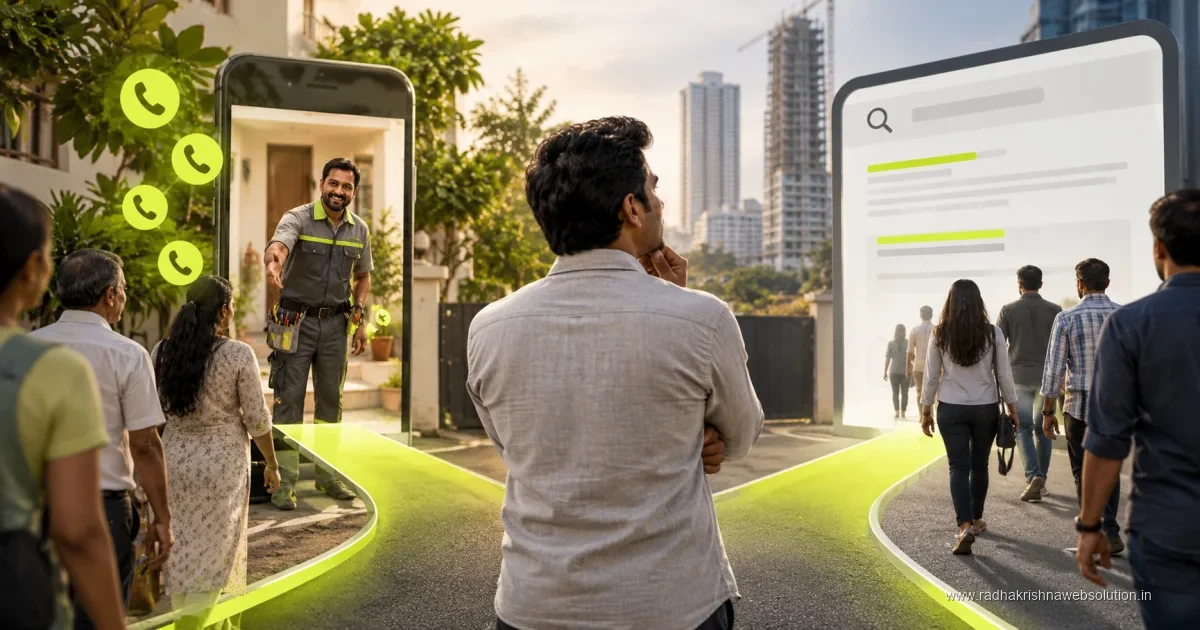
Google Local Services Ads and standard Google Ads have different availability, eligibility and charging models. Before comparing them for an Indian business, check whether the relevant country and service category are supported. Choose a channel according to customer intent, operational coverage and how qualified enquiries will be measured.
Plumbers, electricians, cleaners, pest-control teams and clinics in Pune and Vadodara all ask the same question: should we try Local Services Ads or stick to regular Google Ads. The two look similar but buy leads very differently. Start with our Google Ads cost guide for India and our SEO versus Google Ads comparison, then use this guide to pick the format that suits your trade and call-handling capacity.
What Local Services Ads are and how they work
Local Services Ads show at the very top for home-service searches, with a business name, rating, hours and a call or message button. Customers contact you directly from the ad without visiting your website first. You generally pay per valid lead rather than per click, and you can dispute invalid or irrelevant contacts through the platform process.
Availability in India has been limited and trade-specific, and onboarding needs verification of business details, service areas and reviews. That verification is the point: Google highlights only businesses it can badge and hold accountable. Our performance marketing work treats this format as a call-first channel, not a website-traffic channel.
How regular Google Ads differ for service businesses
Regular Google Search Ads send people to your website or landing page when they search. You pay per click, control keywords, budgets, ad copy, extensions and landing pages, and you can run in any city from day one. That control is powerful, but it also means you carry the work of filtering clicks, answering fast and tracking which calls become jobs.
For most Indian SMBs, Search Ads remain the flexible default because they cover every trade, from CA firms to interior designers. Pair them with a fast mobile site from our website development team and clear call tracking, and review our Google Ads versus Meta Ads guide before you split budgets across platforms.
| Factor | Local Services Ads | Regular Google Search Ads |
|---|---|---|
| Best for | Repeat home services with urgent calls | All service trades, including niche and high-value jobs |
| You pay for | Valid leads, with dispute process for invalid ones | Clicks, whether or not they become leads |
| Control | Limited: profile, areas, hours, reviews | Full: keywords, budgets, ads, landing pages |
| Needs to succeed | Fast pickup, good ratings, clean service profile | Sharp landing page, fast follow-up and call tracking |
Which should you choose for your trade
Choose based on job value, urgency and how fast you answer. Emergency and repeat jobs like plumbing, electrical repair, appliance service and cleaning suit lead-based formats when available in your city and category. High-consideration jobs like interiors, construction, legal and B2B services usually need the education and proof that only your own landing pages can give.
- Pick Local Services style when jobs are urgent, local and similar each time, and you can answer in minutes.
- Pick Search Ads when customers compare portfolios, fees and process before calling.
- Use both when eligible: Services Ads for overflow calls and Search Ads for premium or custom jobs.
- Keep building local SEO alongside, with help from our local SEO checklist and SEO services.
How to get more valid calls and avoid waste
Both formats punish slow follow-up. A missed call is a paid lead lost, whether you paid per lead or per click. Assign one person to answer during working hours, set call routing for after-hours, and log every enquiry with source, area and outcome. Review invalid leads promptly and tighten service areas and hours where junk calls cluster.
On your website, keep one focused landing page per service and area, with reviews, pricing guidance, photos and a single call or WhatsApp action. Our notes on SEO for service businesses and digital marketing planning show how to keep messaging consistent from ad to page to phone.
A simple next-step plan for Pune and Vadodara SMBs
Do not chase a new ad badge before your basics are ready. Fix profiles, reviews and landing pages first, then test paid leads in one service and one area. Measure booked jobs and revenue, not just calls, for at least a few weeks before you scale.
- Check eligibility, verification needs and service coverage for your trade and city.
- Clean your profile, reviews, hours and service areas, and build one fast landing page per service.
- Start small with tight areas and hours you can serve, with call tracking switched on.
- Review leads weekly, dispute invalid ones where allowed and shift budget to jobs that book.
Want help choosing and managing the right ad mix? Contact RadhaKrishna Web Solutions or call +91 70962 91214 for honest paid-lead guidance for your service business in Pune or Vadodara.
What Budget and Job Value Make Paid Calls Worthwhile
Paid calls make sense only when job value and booking rate support the cost. Emergency plumbing visits, repeat cleaning contracts and multi-visit clinic treatments can justify lead costs more easily than one-off low-value jobs with heavy travel. Before scaling, estimate how many calls become site visits and how many visits become paying jobs, then work backwards to a per-lead limit you are comfortable with.
Keep the first test narrow: one service, one area and hours you can actually serve. This keeps travel practical and follow-up fast. If cost pressure is high, use ideas from our playbook to reduce cost per lead alongside tighter areas and timings, so you improve booking rate rather than only chasing cheaper calls.
Example Campaign Setup for Plumbers, Cleaners and Clinics
A practical starter setup separates urgent demand from comparison demand. Use a call-first layer for emergency and repeat jobs where customers decide quickly, and a landing-page layer for jobs where customers compare reviews, photos and pricing before calling. Both layers need call tracking, clear service areas and one owner for fast response.
- Call-first layer: tight service areas, working hours you can staff, and profiles with reviews, photos and service lists completed.
- Landing-page layer: one focused page per service and area with reviews, pricing guidance, photos and a single call or WhatsApp action.
- Support layer: GBP profile, reviews and local pages kept updated so ads, organic and direct calls reinforce each other.
| Business example | Call-first focus | Landing-page focus |
|---|---|---|
| Plumber in Pune | Leak repair and blockage calls in nearby areas | Bathroom fitting and full-house work with quote page |
| Cleaning team in Vadodara | Urgent home cleaning slots | Deep cleaning and office contracts with package details |
| Local clinic | Same-day appointment calls | Treatment pages with doctor profile and FAQs |
Your landing pages decide how many clicks become booked jobs. Apply ideas from our guide to landing page optimisation for better leads to keep the path from ad to call short and reassuring.
Common Mistakes That Waste Service Ad Budgets
Slow response wastes more budget than most settings. If calls go to voicemail during working hours or WhatsApp replies arrive late in the evening, paid enquiries cool quickly. Other common issues are keeping service areas too wide, leaving hours open when no one can attend, and sending all services to one generic page without proof or pricing direction.
- Keeping areas too broad, which brings distant enquiries you cannot serve profitably.
- Missing calls and slow callbacks, especially during peak morning and evening hours.
- Thin profiles with few reviews, unclear services and outdated hours.
- No system to mark invalid, duplicate or out-of-area leads for review.
- Judging only on call count without checking how many calls become site visits and jobs.
Fix operations before raising spend. Assign call duty, set routing for after-hours, log every lead with source and outcome, and tighten areas where junk calls cluster.
How to Measure Booked Jobs and True Cost Per Job
Calls are not bookings. Measure answered calls, site visits booked, jobs completed and revenue by source, then calculate cost per booked job rather than cost per click or per call. Clean tracking makes this possible even with simple tools, as explained in our conversion tracking setup guide. Record which area, service and hour produced the job, so you can shift budget to combinations that actually pay.
Review weekly. Listen to a sample of calls where possible, note repeat invalid patterns, and pause hours or areas that bring repeated low-quality contacts. Over a few weeks, a clear picture emerges of which services deserve more budget and which need better pages, reviews or follow-up rather than more spend.
Official references and further reading
Frequently asked questions
Are Local Services Ads available for all businesses in India?
No. Coverage has been limited by city and home-service category, with verification required. If your trade is not eligible, regular Search Ads plus strong local SEO remain the practical way to get calls.
Do Local Services Ads replace the need for a website?
No. Even call-first formats work better when reviews, profiles and landing pages back them up. A fast site with clear services, areas and contact options helps you convert both ad leads and organic enquiries.
How should I measure if these ads are working?
Track answered calls, booked site visits and completed jobs by source, not just clicks or total calls. Review recordings or logs weekly, follow up within minutes and pause areas or hours that bring repeated invalid leads.
What should I fix before increasing spend on service ads?
Fix answer speed, service areas, reviews and landing pages first. Tighten hours you can staff and log every lead outcome, then scale only services and areas that already bring booked jobs.