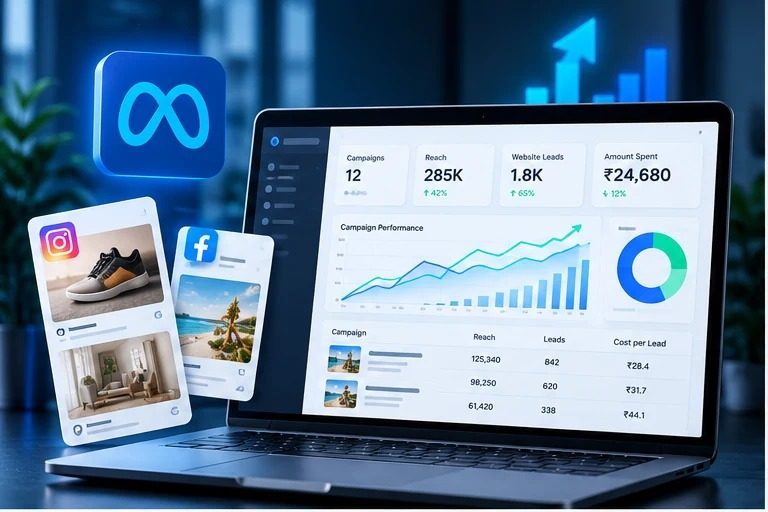
Many small businesses start Meta Ads, receive clicks and enquiries, then discover that those enquiries rarely turn into paying customers. The problem is not always the ad budget. It can be unclear offers, slow landing pages, broken tracking, weak creative or lead forms that attract people with little purchase intent.
If your Facebook and Instagram ads are getting clicks but no leads, follow this diagnostic process before increasing spend. This article focuses on improving campaigns that are already running; for campaign setup basics, read our Meta Ads guide for Indian small businesses.
First, identify where the conversion journey breaks
A click is not a lead, and a lead is not a sale. Follow the full journey: impression, click, page view or opened form, completed enquiry, qualified lead and eventual sale. Compare metrics across these steps before deciding what needs repair.
| Symptom | Possible cause | First check |
|---|---|---|
| Clicks but few page views | Slow pages, connection issues, misleading clicks | Landing-page speed and analytics events |
| Visits but no enquiries | Weak offer, unclear form, low trust | Form testing and page messaging |
| Many leads but no sales | Low intent, weak qualification or slow follow-up | CRM outcomes and response time |
| Conversions in Ads Manager but not in CRM | Tracking differences or duplicate events | Event definitions, attribution and deduplication |
1. Check the campaign objective and conversion location
Meta optimizes based on the goal you choose and the events it can observe. A traffic campaign may deliver clicks without prioritizing qualified enquiries. Check whether leads are expected through an instant form, website or messaging conversation, and ensure the objective reflects the actual business goal.
2. Audit Pixel, Conversions API and event deduplication
Use Meta Events Manager to confirm the relevant events fire only when appropriate. If both browser Pixel and Conversions API submit the same action, consistent event IDs can help avoid double counting. Respect applicable privacy requirements and consent choices. Avoid judging a campaign from platform totals alone; reconcile with actual CRM records.
3. Make the offer understandable immediately
The creative and landing page must answer who the service is for, what problem it solves, where it is available and what happens after submitting an enquiry. Clear price ranges or eligibility requirements can improve qualification where appropriate. Do not promise unrealistic outcomes.
4. Test creative angles, not just colours
Try different customer problems, use cases, proof points and formats. A short demonstration, before-and-after process explanation, case study or founder explanation may communicate value differently. Keep claims truthful, comply with Meta advertising rules and judge winners on downstream outcomes instead of click-through rate alone.
5. Fix the landing page for mobile users
Most social clicks originate in a mobile browsing context. Check loading speed, button visibility, readable text, form errors, WhatsApp handoff and whether the information promised in the ad actually appears on the page. If the page is outdated, our website development team can help improve usability.
6. Reduce friction without sacrificing lead quality
Ask only for information the team needs to respond, but include an appropriate qualifying question when the sales team receives many irrelevant enquiries. Explain response times and make consent language understandable. Test both instant forms and website forms where practical.
7. Review audience overlap and geographic relevance
For a local service, verify the serviceable locations and language in the advertisement. Exclude locations you cannot serve. Avoid repeated micro-targeting changes before enough results exist to evaluate the change.
8. Measure qualified lead cost, not only cost per lead
A campaign generating cheap enquiries can be expensive if almost none qualify. Track qualified lead rate, contact rate, scheduled consultation rate and actual sales. Share anonymized CRM outcomes with the team improving the campaigns.
9. Change one major variable at a time
Write down the hypothesis, change, date and results. Allow campaigns enough learning time and comparable exposure before drawing conclusions. Seasonal shifts, promotions and sales-team responsiveness can affect performance.
When to stop spending and diagnose
Pause or reduce spend when tracking is broken, the destination does not work, the campaign violates policy or the business cannot respond to enquiries. More spending will not repair a broken website. For help deciding where paid ads fit, see Google Ads vs Meta Ads for Indian businesses.
Frequently Asked Questions
Why are my Meta Ads getting clicks but no leads?
Common causes include mismatched campaign objectives, poor landing-page experience, unconvincing offers, form errors and measurement issues. Diagnose each stage of the journey.
Should I increase my Meta Ads budget if leads are low?
Not until you confirm tracking, landing-page functionality, lead quality and conversion settings. Increasing spend can magnify an existing problem.
Are Facebook instant forms or website forms better?
Both can work. The better choice depends on qualification needs, CRM integration, privacy requirements and how effectively your team follows up.
Need a practical Meta Ads audit?
Start with campaign settings, Events Manager, the landing page and your lead-status data. If you need an independent review, contact RadhaKrishna Web Solutions and share the business goal rather than only the latest ad spend.