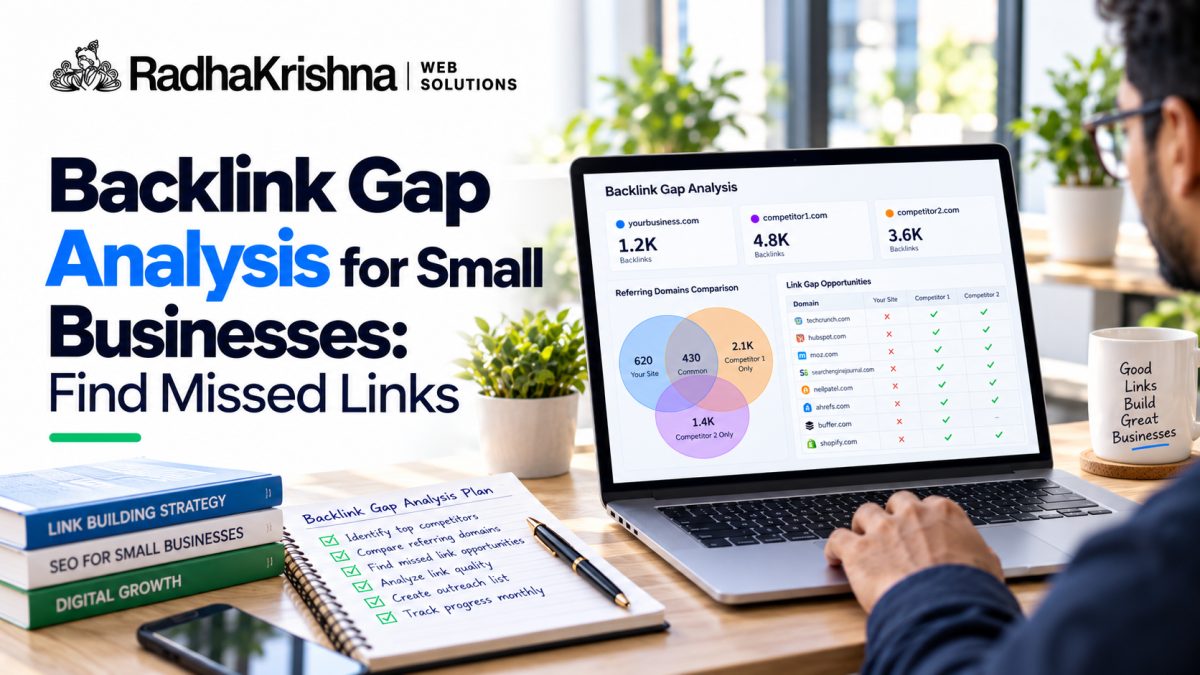
If competitors in Baner or Alkapuri always show above you, their backlinks often explain why. Read our SEO guide for service businesses first, then use this simple backlink gap method to find citation and link chances you are missing.
What is a backlink gap for a small business?
A backlink gap is the list of websites linking to your competitors but not to you. For SMBs, this is rarely about big news sites. It is usually local directories, supplier pages, associations, colleges, event pages, and blogs that mention two or three similar businesses but missed you. Finding that gap shows where a normal business like yours is expected to be listed. Our SEO services use this check before suggesting any new content, so effort goes where it counts.
You do not need to copy spammy links. The goal is to spot relevant, realistic mentions you can earn honestly with a profile, partnership, or helpful update.
Do a free manual gap check in one afternoon
Pick three direct competitors who rank well on Maps and search, not national giants. Search Google for their brand name plus city, and note directories, news, and blogs that mention them. Check their Google Business Profile, Facebook About section, and partners page for clubs, NGOs, and suppliers. Use free tools like Google Search, Bing, and the Search Console links report to list referring sites. Record everything in a sheet with site, link type, and action needed.
What to capture for each competitor
- Business directories and local listings like Justdial and Sulekha.
- Supplier, dealer, or brand-authorised partner pages.
- Local associations, gymkhanas, chambers, and college festival sponsors.
- Blogs, news, and YouTube descriptions that list top shops in area.
- Event, expo, and stall participant lists with business profiles.
This manual method suits single-city budgets and avoids costly subscriptions. Pair this with ideas from our B2B lead system beyond IndiaMART if you sell to businesses.
Prioritise gaps that are safe and relevant
Not all competitor links deserve outreach. Score each chance on relevance, trust, and effort, and skip link farms, paid guest-post sellers, and irrelevant foreign directories.
| Link type | Good for SMB? | How to earn |
|---|---|---|
| Local directories and citations | Yes, high priority | Claim and complete profile with NAP |
| Supplier and dealer listings | Yes, high priority | Ask with bill and photos as proof |
| Association and college pages | Yes, medium effort | Sponsor or offer free workshop |
| Local blogs and news lists | Yes, selective | Suggest update with useful info |
| Paid link packages and PBNs | No, avoid | Skip and report spam if pitched |
Focus first on citations and suppliers, as they are fastest and safest. Then pick five editorial chances where you can genuinely help the publisher.
Close the gap without buying links
Start with citations: fix name, address, phone, hours, and categories, and add real photos. Then email suppliers with your dealer certificate and request inclusion on their store-locator page. For associations, join one active group in Pune like a traders association and contribute before asking for a member profile link. For bloggers, suggest a correction or addition, like updated timings, price range, or new branch in Wakad, rather than begging for a link. Keep every mail short, in plain English, with proof attached.
- Week 1: fix top 20 citations and Google Business Profile categories.
- Week 2: request supplier and brand locator updates with documents.
- Week 3: pitch five local pages with helpful updates or photos.
- Week 4: publish one local resource that deserves a link, like a rate guide.
Track new links in Search Console and note calls from those pages. Steady, honest wins compound better than shortcuts. Our digital marketing team never buys links, as the risk to your domain is not worth it.
Keep your profile clean and steady
Check quarterly for lost links, changed addresses, and duplicate listings after shifting shop. Disavow only if you have a clear spam attack and expert help, as wrong use can harm you. Build one useful local page per quarter, such as hostel PG rates near Hinjewadi or RO service charges in Vadodara, that others naturally cite. Consistency beats intensity for SMB link building.
How to read competitor backlink profiles without costly tools
Small businesses often assume gap analysis needs expensive subscriptions, but a careful manual review covers most local chances. Search each competitor brand name in quotes along with the city, such as brand name + Baner or brand name + Alkapuri. Note which directories, supplier pages, and blogs mention them, and open their About, Partners, and Contact pages for associations and stockists. These pages reveal the normal web of relationships expected in your trade.
Use the free links report in Search Console for your own site and compare it with what you found for rivals. If all three competitors appear on the same traders association list and the same supplier locator pages, those are likely core gaps. Our local citations list for India can help you check whether basic directories are the real gap before harder outreach. Focus on patterns first, then act on the easiest matches.
Simple signals that a gap is worth closing
- Two or more local competitors are listed, but your business is missing.
- The page is relevant to your city, category, or customer need.
- You can offer honest proof, such as a bill, certificate, or event participation.
Turn gap findings into a 90-day outreach calendar
A long sheet of gaps can feel overwhelming, so convert it into a small weekly routine. Divide chances into quick citations, partner pages needing documents, and editorial pages needing a helpful pitch. Spend the first fortnight on directories, the next fortnight on suppliers, and the following month on associations and local blogs. Slow and steady progress suits small teams better than rushed bulk work.
Personalise the first two lines of every mail. Supplier mails should mention your dealership period and give the exact NAP to be listed. Blogger mails should mention the specific listicle and offer fresh photos or rates. If reviews need attention alongside links, see our guide on how to get more Google reviews, as stronger reviews improve conversion from every new mention. Keep notes on what worked so the next quarter becomes easier.
- Days 1 to 15: claim and correct citations and Business Profile details.
- Days 16 to 30: request supplier and brand locator inclusions with proof.
- Days 31 to 90: join one association and pitch five local blogs with updates.
Mistakes to avoid when closing backlink gaps
The biggest mistake is copying every competitor link without judgement. If a rival has paid links or irrelevant foreign listings, copying them can harm you. Never buy links, join private blog networks, or pay for bulk guest posts, as these violate Google guidelines and can lead to penalties that take months to recover from. Be cautious of sellers who promise a fixed number of links for a fixed fee without sharing the site list. A few honest listings are far safer than dozens of paid placements.
Track simpler signs than third-party scores, such as how many gap sites now list you correctly and whether they send calls. Our notes on brand search optimisation in India explain how consistent NAP keeps name searches accurate while you build mentions. Keep your NAP identical everywhere, decline link-exchange groups, and review your sheet monthly. Patient, white-hat gap closing protects your domain and builds referrals beyond search.
Want a practical gap sheet for your city and category? Contact RadhaKrishna Web Solutions for a white-hat review, or call +91 70962 91214 to discuss Pune and Vadodara options.
Frequently asked questions
Can I do backlink gap analysis for free?
Yes. Use brand-name searches, competitor About pages and Search Console links to list directories, suppliers and blogs linking to rivals but not you.
Which gaps should an SMB fix first?
Fix local citations and supplier locator pages first, as they are fast and safe. Then pitch local blogs for updates with photos or new info.
Should small businesses buy backlinks?
No. Paid links risk penalties and waste money. Earn citations, supplier listings and editorial mentions through genuine updates and partnerships.
How often should an SMB repeat gap analysis?
Repeat a light review every quarter. Check for new competitor mentions, lost links and outdated NAP, then act on a few relevant chances.