Worked example: Vadodara home services query analysed step by step
Consider a Vadodara business targeting deep home cleaning services in Vadodara. An incognito search with India location shows a mixed result: two local service pages with area coverage and call buttons, one national directory list, a People Also Ask box with pricing and duration questions, and image results showing before-and-after photos. That mix tells you Google treats this as a local service intent, not an educational topic.
The practical read is simple. A long generic blog on cleaning tips would struggle here, while a focused service page with Manjalpur, Nizampura and Alkapuri coverage, a breakup of what deep cleaning includes, duration guidance, preparation notes and clear call and WhatsApp options matches the intent. Add four to six FAQs drawn from People Also Ask, include original photos of your team at work, and link the page from your homepage services list and one supporting blog. This kind of reading takes fifteen minutes and shapes the whole brief.
Simple SERP brief template you can reuse
After reading the results, record your findings in a short template so your writer acts on them. Note the target keyword, dominant page type, main intent, common H2s across the top results, People Also Ask questions to answer, visuals to add and internal links to include. Keep it to half a page so it actually gets used by busy teams.
- Keyword, location setting used and date of check
- Dominant page type and intent in one line each
- Must-have sections seen across top three results
- Four to six related questions to cover as FAQs
- Proof points: photos, reviews, service areas, process details
Store briefs in one folder and revisit them when rankings stall. Comparing your page against the brief often shows whether the draft drifted into generic advice when the results wanted a local service page. Pair this habit with occasional competitor research for small business SEO to see which rivals added sections you still miss.
Common SERP reading mistakes SMBs make
A frequent mistake is checking results while logged in, where personal history and location skew what you see. Always use an incognito window with the right city setting, and confirm on mobile too, since many service queries show different layouts on phones. Another mistake is reading only the top organic link and ignoring maps, People Also Ask and video blocks that reveal extra intents your page should serve.
- Judging difficulty by domain names alone instead of page quality and local relevance
- Copying headings from one ranking page instead of combining common sections across three to four
- Ignoring the local pack when the query clearly triggers maps and calls
- Writing a blog when every result is a service or location page, or vice versa
- Treating one check as permanent and never re-reading the SERP after publishing
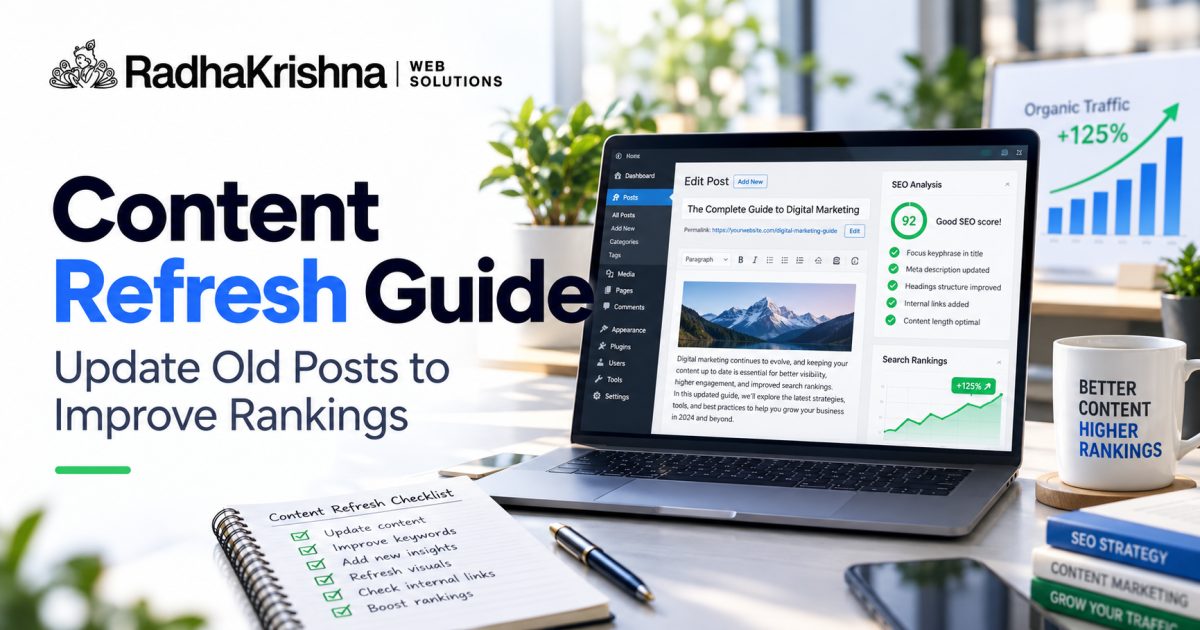
Teams also forget to refresh pages whose SERPs have shifted. If a query that once showed guides now shows calculators, videos or map packs, your page format may need adjusting. A quarterly re-check of money pages, as explained in our content refresh guide for old posts, catches these slow shifts early.
When to do it yourself and when to get help
Most SMB owners can handle SERP reading for straightforward local queries with the steps above. If results are dominated by strong national players, forums with detailed tools, or pages with far deeper resources than you can build, consider narrowing the query or getting outside judgement before investing weeks of writing.
Bring in help when you plan a full set of service and location pages, when past content repeatedly missed intent, or when you need briefs at scale across many keywords. A steady routine matters more than one-off analysis, so fold this check into your monthly SEO workflow for SMBs and review priority pages on a fixed schedule. Done regularly, fifteen careful minutes per keyword saves months of misdirected writing.
Before writing any service page or blog, spend 15 minutes reading what Google already ranks. That page tells you intent, format and depth expected. Pair this habit with keyword research basics and why your website is not ranking to avoid creating pages that never had a chance.
What SERP analysis means for busy owners
SERP analysis simply means studying the search results page for your target keyword before creating content. Look at who ranks, what type of pages they are, and what questions they answer. For example, seo cost in India shows guides and pricing explainers, while hire seo agency Pune shows service and agency pages. Writing a blog when Google wants a service page rarely works.
This step saves small teams from wasted effort. One careful look at results in Pune or Vadodara search settings often reveals that you need a location page, not another generic blog.
Check intent, page type and angle in 10 minutes
Search your keyword in an incognito window with India location. Note the mix: service pages, blogs, videos, maps, directories or tools. Then open the top 5 results and note their angle, headings and missing points. Are they beginner guides, cost breakdowns, comparisons or how-to steps?
- Identify dominant page type: service, blog, location or tool
- Note intent: buy, compare, learn or find nearby
- List common H2s across top 3-4 results
- Spot gaps: pricing, process, local examples, FAQs
- Decide your format to match intent but add unique value
Match your format to Google preference but differentiate with local proof, clearer steps or better FAQs. If results are all national directories, a focused local page with reviews and service areas can still win enquiries.
Read SERP features and People Also Ask carefully
Modern results include featured snippets, People Also Ask, maps, videos and discussions. These show extra intents you should cover on the same page. If People Also Ask shows cost, timeline and process questions, include concise answers in your FAQs rather than creating separate thin posts.
| SERP element | What to do | Example action |
|---|---|---|
| Featured snippet | Add 40-60 word direct answer | Definition box at top of guide |
| People Also Ask | Cover 4-6 related FAQs | Pricing and timeline FAQs |
| Local pack | Strengthen profile + location page | Areas, photos, reviews |
| Video / images | Add original visuals | Process photos, screenshots |
Track which queries trigger these features in Google Search Console. Pages that win snippets often get more clicks even without top position, which helps small sites compete.
Judge difficulty honestly before you commit
Check who you must beat: established brands, news sites, directories or other SMBs. If top results are strong domains with hundreds of quality links and detailed tools, pick a narrower angle like a specific area or audience. For instance, instead of digital marketing guide, target digital marketing for clinics in Vadodara with local examples.
Use our how to choose a digital marketing agency checklist if you need outside help judging difficulty, and review technical SEO checklist to ensure your page is crawlable and fast before expecting it to compete. A good page on a weak technical base struggles unnecessarily.
Turn observations into a simple brief
Write a half-page brief before writing: target keyword, intent, page type, must-have H2s, FAQs from People Also Ask, internal links to add, and one unique proof point. Share it with your writer so content matches what Google rewards. After publishing, link it from relevant blogs and service pages.
For instance, if you target website cost for small business Pune and results show cost guides with breakups, your brief should require sections on design versus development, maintenance, timelines and what affects pricing for Indian SMBs. If results show mostly service pages, do not write a long educational blog; strengthen your service page with clear scope, process and contact options instead.
Re-check the SERP after publishing. If Google shifts to videos or local packs, adjust by adding a short explainer video or strengthening your local page. SERP preferences change slowly, but a quarterly re-check keeps your key pages aligned.
Our SEO services include SERP-based briefs for SMBs, and website development ensures new pages load fast and fit your site structure. Research first, write second.
Want content that matches what Google wants? Contact RadhaKrishna Web Solutions or call +91 70962 91214 for practical content planning.
Frequently asked questions
How long should SERP analysis take?
About 15 minutes per keyword: check page types, top headings, People Also Ask and difficulty. That quick check prevents writing pages Google never wanted to rank.
What if results show only big brands?
Narrow your angle to a specific audience or area, such as clinics in Vadodara instead of a generic guide. Local proof and focused FAQs help small pages compete.
Should we copy the top-ranking page structure?
Match the format and intent, but do not copy text. Cover common must-have sections, then add unique value with local examples, process photos and concise answers.
How often should we redo SERP analysis?
Re-check priority keywords every quarter or after major ranking shifts. Search layouts and competitor pages change slowly, so periodic reviews keep briefs accurate.