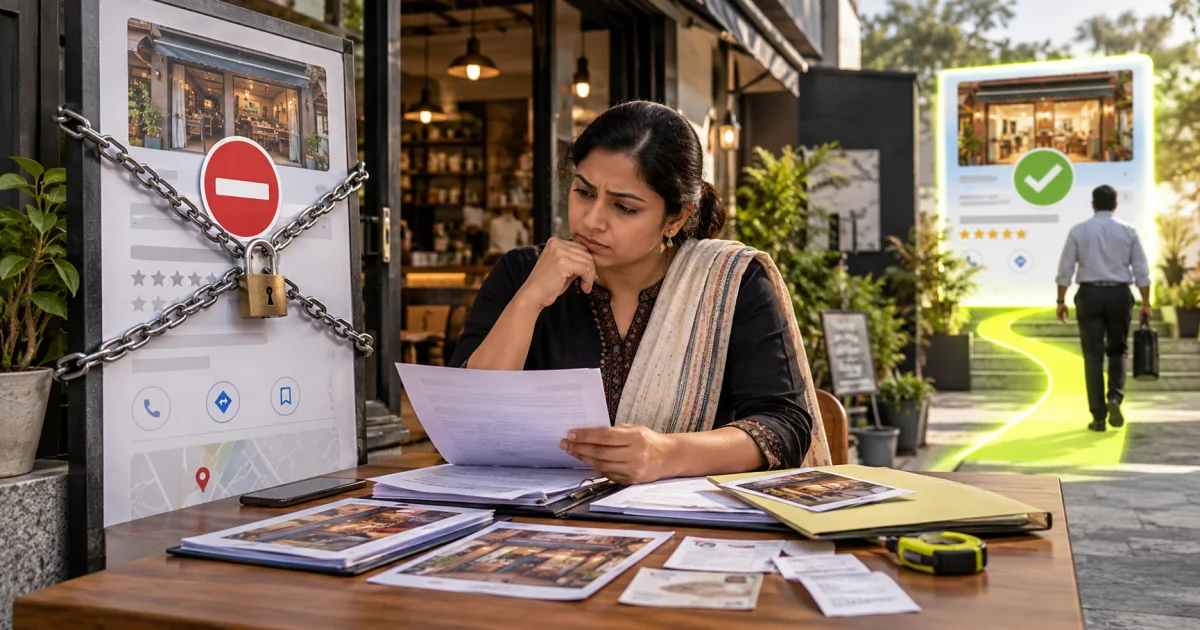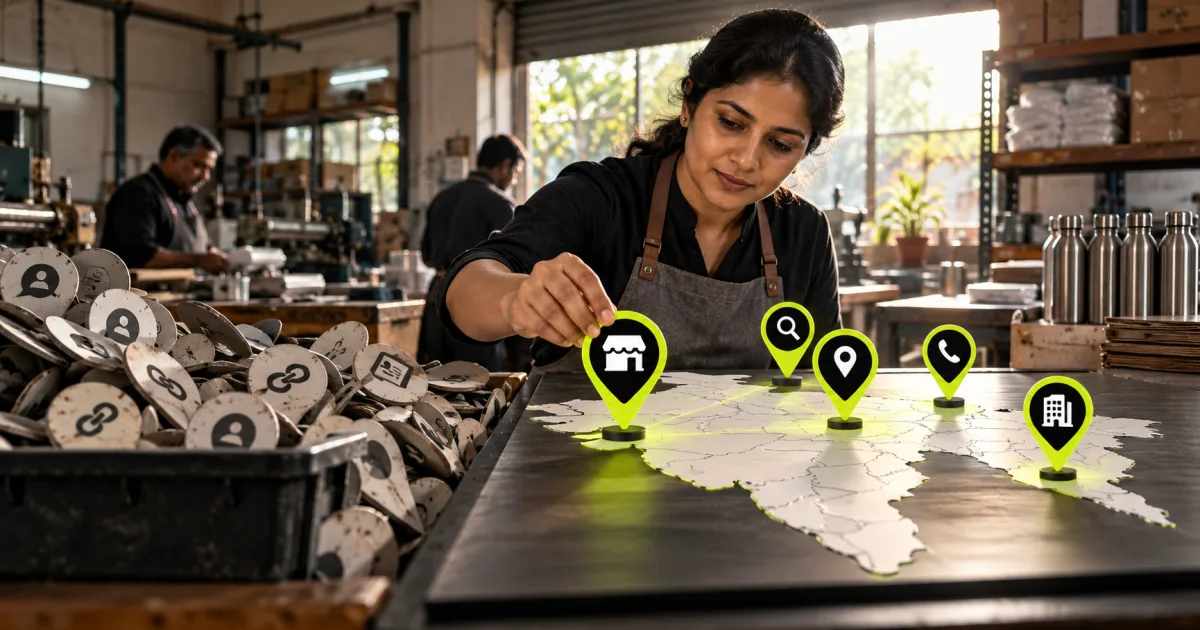
Local SEO versus national SEO depends on where customers can buy from you and what they search for. Local work often centres on a defined service area and eligible business listings; national work usually targets broader demand. Choose page scope, content and measurement according to the business model rather than geography alone.
Most businesses that ask us about local SEO vs national SEO have already picked a side, usually the wrong one. A four-branch dental group in Pune wants to rank for "best dentist in India". A software company selling to buyers in twelve states keeps optimising its office address. Both are spending on the wrong map.
The choice is not about ambition. It is about where your customer stands when they search, and whether you can serve them from there. Get that right and the rest follows: which pages you build, what you spend, and how you judge progress. This post covers the differences that actually change decisions, and how we scope a search engagement once the answer is clear.
What is the real difference between local SEO and national SEO?
Local SEO wins customers who need someone nearby and will travel to you or have you travel to them. National SEO wins customers who do not care where you sit because the product ships, streams or gets delivered remotely. Proximity is the dividing line, not company size.
A physiotherapy clinic in Akurdi and a physiotherapy equipment manufacturer in Akurdi sit on the same street. The clinic needs people within eight kilometres. The manufacturer needs procurement managers in Chennai, Ludhiana and Rajkot. Same postcode, opposite search strategies.
Test it with one question: if a customer 900 kilometres away wanted to buy from you tomorrow, could you serve them profitably? If yes, national is on the table. If no, every rupee spent chasing national keywords buys traffic that cannot convert.
Local SEO vs national SEO: how Google ranks each
Google runs two overlapping systems here. The local pack and Maps results weigh proximity to the searcher, the relevance of your business categories, and prominence built from reviews, citations and mentions. Your Google Business Profile does more work than your website in these results. Distance is a factor you cannot buy your way past.
Standard blue-link national results ignore proximity for most queries and weigh topical depth, page experience and links from sites Google already trusts. You are competing with national brands, marketplaces and publishers with years of content behind them. That position is slower to build and slower to lose.
The difference decides where the work sits. Local programmes lean on Google Business Profile management, review velocity and consistent name, address and phone data across JustDial, IndiaMART and directory listings. National programmes lean on content depth, internal linking and technical health.
If your goal is the three-result map block, the mechanics deserve their own treatment, and we cover them in our guide to getting into the Google map pack.
Page architecture: one site, two different builds
Local sites are wide and shallow. You need a page for each service, often a page for each service crossed with each area you serve, plus a distinct page for every physical branch. Each branch page carries its own address, hours, staff and embedded map. Thin duplicates of these pages get filtered out, so each one needs genuinely local content.
National sites are deep and clustered. You build a strong pillar page per topic, supporting articles that answer narrower questions, and comparison or buying-guide pages that catch people close to a decision. Location pages add nothing. Depth on one subject beats breadth across ten.
The service-page layer is where most local sites break. Service businesses often publish one combined services page and wonder why nothing ranks, and splitting it properly is covered in our piece on search for service businesses.
What does each approach cost in India?
At RKWS, SEO starts at ₹3,500 per month, digital marketing starts at ₹3,000 per month and Google Business Profile management starts at ₹2,000 per month. Each is a separate scope. Larger catalogues, additional locations and technical repairs require assessment, while paid media spend is separate from management fees.
Local budgets go mostly into profile work, reviews, citations and a modest set of well-built pages. National budgets go mostly into content production and the technical work that lets it perform. If you want the line-item view, we published what SEO pricing looks like in India.
One honest warning about the cheap end. A Rs 8,000 retainer buys a few hours of someone's month, which is enough to maintain a profile but not enough to compete nationally. Match the budget to the fight, or pick a smaller fight.
How long before you see results, and what should you measure?
Local SEO tends to move first, because map pack ranking responds comparatively quickly to profile quality and reviews. National SEO is slower and compounds, so expect meaningful movement over quarters, not weeks. We will not promise rankings, and any agency that does is guessing.
Our campaigns go live in two to four weeks and we hold weekly checkpoints from there. Early local signals are profile views, direction requests, calls from Maps and review count. Early national signals are indexed pages, impressions on new query clusters and average position drift.
Rankings are not the scoreboard. These are:
- Calls and WhatsApp enquiries tagged by source, not total site traffic
- Direction requests and profile calls for each branch, tracked monthly
- Enquiry-to-quote rate, which tells you whether the traffic is the right traffic
- Cost per qualified enquiry, compared against your other channels
- Revenue per enquiry by service line, so you know which pages to expand
- Reviews gained per month, per location
Set this up before the campaign starts, not after. Call tracking, form source tags and profile insights take an afternoon to configure and settle every later argument about attribution.
A decision framework by business type
Start with the customer, not the keyword. Run these five steps before you approve any budget.
- List where your last 20 paying customers came from, by city or pincode.
- Ask whether you can deliver profitably outside that radius today, including logistics and after-sales service.
- Search your three most valuable service terms and check whether Google shows a map pack or only blue links.
- Look at who ranks nationally in your category and judge whether you can realistically out-publish them.
- Pick the option that matches steps 1 to 4, and commit to it for at least two quarters.
The table below sets out where businesses of each type usually land.
| Business type | Where customers search | Start with | Typical monthly band |
|---|---|---|---|
| Single-location clinic, salon, gym or restaurant | Maps and "near me" queries on mobile | Local SEO only | RKWS SEO from ₹3,500/month for an agreed scope; additional locations and larger programmes are quoted separately. |
| Multi-branch service business across three to eight cities | Map pack per city, plus city service pages | Local SEO, one profile per branch | RKWS SEO from ₹3,500/month for an agreed scope; additional locations and larger programmes are quoted separately. |
| D2C brand shipping across India | Product and category searches, no map pack | National SEO | Rs 40,000 to Rs 1,50,000 |
| B2B manufacturer or exporter | Specification and supplier searches nationwide | National SEO, local as support | Rs 40,000 to Rs 1,50,000 |
| Software or professional services sold remotely | Problem and comparison searches | National SEO | Rs 40,000 to Rs 1,50,000 |
When a business genuinely needs both
Plenty of businesses sit in the middle. A furniture manufacturer with a Pune showroom sells to walk-ins and to dealers across Maharashtra and Gujarat. A CA firm serves local clients in person and takes GST and compliance work remotely, and has to work inside ICAI advertising limits while doing both. Ignoring either side leaves money on the table.
The mistake is running both at half strength from day one. Sequence instead. Local first, because it is cheaper, faster and closes the revenue gap that funds the rest, so work through a practical local setup list before you spend anything on national content. National second, once the local pipeline is steady and you know which services convert.
The two can share a site without conflict. Keep branch and city pages in one clean section, keep national topic clusters in another, and never let a location page and a national pillar target the same phrase. Our Pune search team runs this split for businesses selling well beyond Pimpri-Chinchwad, including Vadodara clients served from our Akurdi office.
If you are unsure which side you sit on, send us your last quarter of enquiries broken down by city and we will tell you plainly. Send our team the details and you will hear back within one business day.
Frequently asked questions
Can a small business rank nationally in India?
Yes, but only in a narrow slice. Pick one specific topic where the national players are weak, publish deeper than anyone else on it, and accept that it takes several quarters. Trying to rank nationally across your whole service list on a small budget does not work.
Does local SEO still matter if most of my sales come from IndiaMART or JustDial?
It matters more, not less. Those platforms rent you visibility and place you next to competitors on the same page. A ranked Google Business Profile and your own site give you enquiries you own, at a cost that does not rise at every renewal.
Will national SEO help my local rankings, or the other way around?
Partly. Content depth and site health help both, and a strong local reputation creates trust signals that support wider rankings. But proximity still governs the map pack, and no amount of national content puts you in a city where you have no address.
How do I know if my agency is doing local or national work?
Ask what they changed on your Google Business Profile last month and how many pages they published. Local work shows up as posts, category fixes, review responses and citation cleanups. National work shows up as new pages and internal links. If neither is happening, you are paying for reporting.
Pick the fight you can actually win
The businesses that do well in search are rarely the ones with the biggest budget. They are the ones that chose a lane early and stayed in it long enough to compound. If you serve a radius, own that radius completely before you look further. If you ship anywhere, stop optimising for a city that does not matter to your buyer.
We work through this in the first stage of every engagement, before anyone writes a page or touches a profile. Bring your enquiry data, your service list and your delivery radius, and we will map the honest version of what your budget can achieve. Start a conversation with our Akurdi team and expect a reply within one business day.