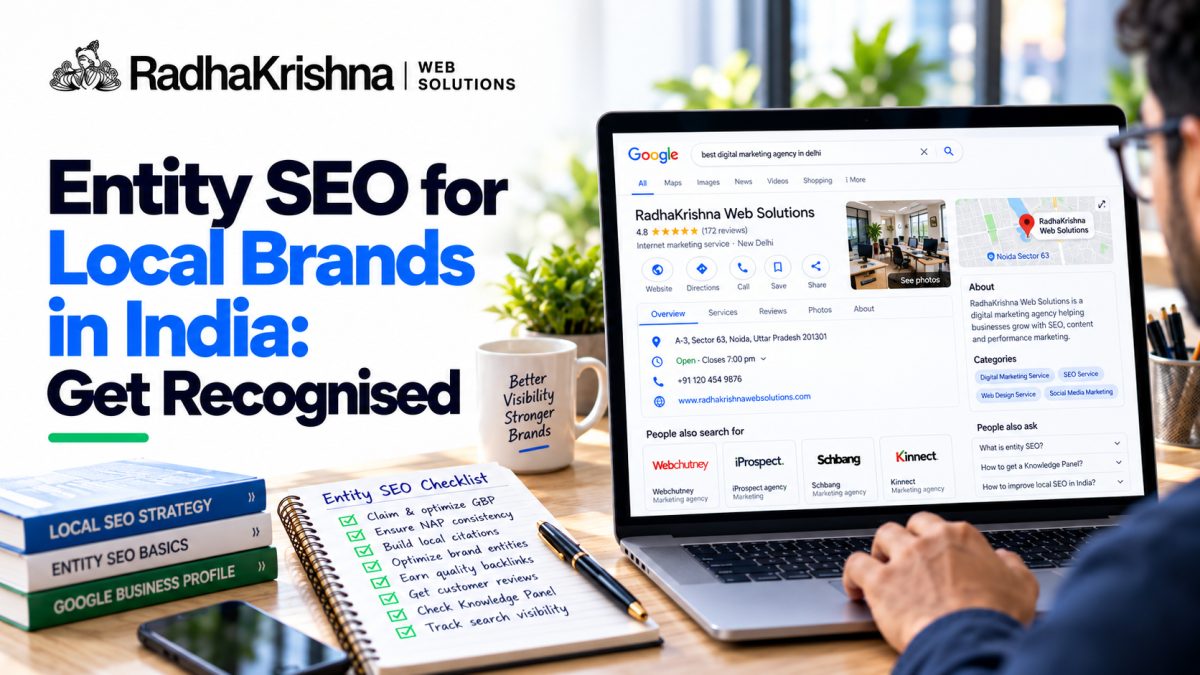
If your shop or service is hard to find on Google Search or Maps, inconsistent business information may be one contributing factor. Entity SEO helps connect your brand's official details and profiles. Start with our local SEO checklist for India and then fix how Google understands your brand as one clear entity across the web.
What is entity SEO for a local brand?
Entity SEO means helping Google recognise your business as a single, real-world thing with a name, address, phone, category, and relationships. For a clinic in Kothrud or a bakery in Vadodara, Google connects your website, Google Business Profile, reviews, citations, and mentions to build confidence. Consistent signals help customers and search systems identify the right business, but they do not guarantee higher rankings for brand, near-me or Maps searches. Our SEO services often start with this clean-up because it improves every later effort.
Think of it like one identity card for your business: use the real business name, current contact details and official website across your most important profiles. Abbreviations in an otherwise correct address are not automatically an SEO issue; outdated phone numbers, wrong locations and duplicate profiles deserve priority.
Fix NAP Consistency: Name, Address and Phone
Pick one official version of your business name, address, and phone, as customers recognise it from signage and official branding. Check the Google Business Profile representation guidelines before editing a listing. Use that same version on your website contact page, footer, Google Business Profile, Justdial, IndiaMART, Sulekha, and Facebook. Do not add city keywords to your real name on listings, as that can cause suspension. Keep hours updated for festivals and weekly closures, and use one primary mobile number for calls everywhere.
Quick NAP consistency checklist
- Choose one name, address, and phone format and document it in a sheet.
- Update website header, footer, contact page, and schema with the same details.
- Correct top 15 citations first, then go deeper to directories and suppliers.
- Review possible duplicate Business Profiles and resolve them through Google's official management or support workflow after confirming ownership and eligibility.
- Use a single tracking approach that does not change the public number everywhere.
A one-time clean-up saves months of confusion. If you need help, our digital marketing team audits listings before running ads.
Connect Official Business Profiles with sameAs and Schema
The sameAs property can identify official brand profiles in structured data. Add only profiles genuinely controlled by the business. On your website, link out to your active LinkedIn, Instagram, Facebook, YouTube, and Google review link. Then link back from those profiles to your website homepage. Use an appropriate Organization or LocalBusiness type with only accurate, applicable details; do not publish a storefront address if you operate solely as a service-area business. Read our Article and Organization schema guide for implementation and testing.
Beyond links, earn brand mentions that do not always include a link. A local news feature, a blogger review, a college event sponsorship, or a supplier case study that names your brand with city and category helps. Publish an About page with founders, year started, areas served like Baner, Wakad, and Hinjewadi, plus photos of shop and team. Real details build entity confidence.
Use this table to prioritise entity work
Not every task has equal impact. Use this simple priority order for the next 30 days, especially if your team is small.
| Task | Why it matters | Effort |
|---|---|---|
| Google Business Profile verification and categories | Core entity for Maps and local pack | Low |
| NAP clean-up on website and top citations | Removes conflicting signals | Medium |
| Homepage schema and sameAs links | Connects official profiles | Low |
| About page with photos and service areas | Proves real local business | Medium |
| Local press and community mentions | Independent validation | Medium |
Complete the top three rows before chasing new backlinks. This clarity is worth fixing for customers even before you can measure any ranking or enquiry impact.
Keep your entity strong with reviews and content
Invite customers with genuine experiences to leave honest reviews, without scripting keywords or offering incentives. Respond helpfully to both positive and negative reviews; do not repeat location phrases unnaturally. Google's review-request guidelines prohibit incentivised reviews. Publish service-area pages only if you truly serve those areas, with unique photos, FAQs, and driving directions. Avoid creating dozens of thin city pages, as that weakens trust. One strong Pune page plus a Vadodara page, if relevant, is better than doorway pages.
- Share your Google review link on bill, WhatsApp, and after service.
- Reply promptly and personally to genuine reviews, addressing the customer's experience rather than adding keywords.
- Post weekly Business Profile updates with offers, work photos, and events.
- Publish one helpful local guide per month, like monsoon maintenance tips.
For deeper reading, see our guide on brand search optimisation in India to protect your name searches while your entity grows. Stay patient and consistent, as entity signals compound over time.
How entity confusion happens in Indian multi-location listings
Entity confusion is very common for small brands that have shifted shop or listed on many portals over the years. A clinic may have moved from FC Road to Baner but the old address still shows on Justdial and Facebook. A bakery may spell its name one way on the shop board and another way on Google. Staff sometimes create a second Google Business Profile by mistake, and reviews split across both. Conflicting profiles can confuse customers and make it harder to manage accurate information.
Customers feel this directly when they call an old number or follow Maps to a closed location. To fix it, list every public appearance of your business in one sheet and compare spelling, address, phone, hours, and category. Our guide to the local citations list for India is a useful starting point for finding where old details may still be live.
Common triggers of entity confusion
- Old address or phone left unchanged on two or three portals after shifting shop.
- Different name spellings across Google, Justdial, Sulekha, and social profiles.
- Duplicate Business Profiles created by staff, agencies, or previous owners.
Strengthen your entity with local content and service-area proof
Once your NAP is consistent, give Google more proof that you are a real local business. Strengthen your About page with founder names, year of starting, shop photos, team photos, and areas you genuinely serve, such as Kothrud, Bavdhan, and Karve Nagar. Add a clear contact page with landmark, parking note, and driving directions in simple words. These honest details help customers and search engines connect your website with your physical presence.
Publish one or two helpful local guides that show your experience, such as RO care in hard-water areas or festive salon booking tips. Link them naturally to your service pages. If you run a service business, read our SEO guide for service businesses to plan area content without thin doorway pages. One strong city page with real photos and FAQs is far better than ten near-duplicate pages.
Entity SEO Checklist: Mistakes and Monthly Tracking
Many well-meaning efforts weaken entity signals. Do not add city keywords to your official business name on Google, as this can lead to suspension. Do not create separate websites for every small area you serve, and do not copy the same About text across city pages with only the area name changed. Avoid paying for links intended to manipulate rankings. If a business directory charges for a legitimate listing, assess whether it helps customers find accurate contact details rather than buying it for link signals.
To see whether recognition is improving, search your brand name plus city each month and check whether your website, Business Profile, and social pages appear together correctly. Count how many important citations display accurate contact details, and track branded search impressions and genuine customer enquiries over time. If you ask for reviews, our playbook on how to get more Google reviews explains how to request them politely without incentives. Keep logins under a business email you control, and stay patient as signals compound.
Want your brand to look like one trusted business everywhere on Google? Contact RadhaKrishna Web Solutions for an entity audit, or call us on +91 70962 91214 for Pune and Vadodara support.
Frequently asked questions
What is entity SEO in simple words?
It is making Google confident that your business is one real entity by keeping name, address, phone and profiles consistent and connected across the web.
How long does entity clean-up take for a small business?
It depends on the number of locations, duplicate listings, account access and third-party directory update times. Fix owned website and Business Profile data first, then track corrections and customer outcomes over several weeks.
Do I need sameAs links on my website?
They are optional but useful where you have authentic official social profiles. Add accurate sameAs URLs to appropriate structured data, link to real business channels, and do not include unrelated or unverified profiles.
Should I create separate pages for every area I serve?
No. Create pages only for areas you truly serve, with unique photos, FAQs and directions. Thin doorway pages weaken trust instead of building it.