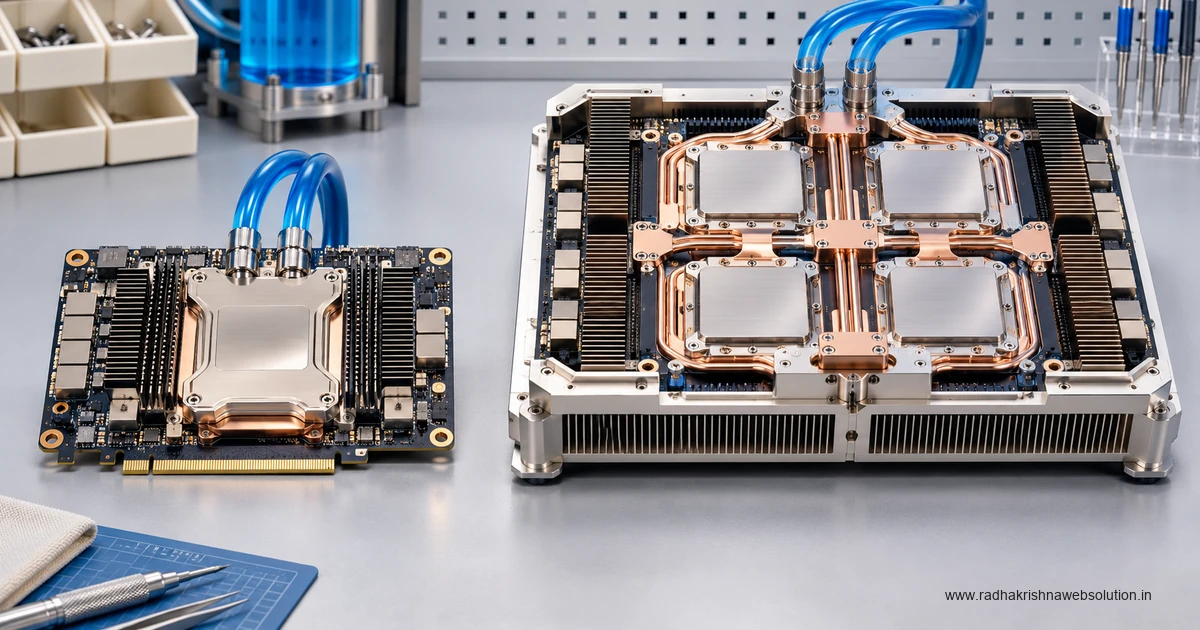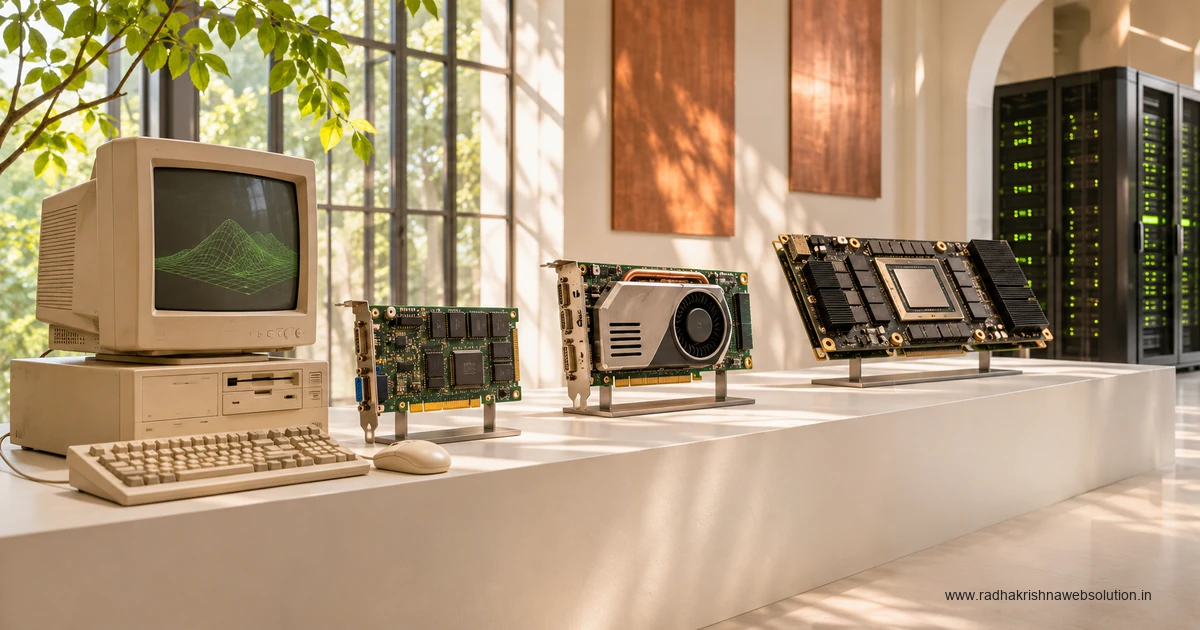
AI processors are commercial products, but advanced accelerators can also have national-security implications. That is why the United States applies export-control rules to certain chips, related technology, end uses and destinations. NVIDIA, one of the world's largest AI computing providers, sits at the intersection of semiconductor competition, cloud computing, industrial policy and geopolitical risk.
For organisations buying AI infrastructure in 2026, the practical question is not merely “Can we buy an NVIDIA GPU?” It is whether a specific item, service, customer and use case satisfies the applicable regulations. This article explains the framework and where to verify it; it is not a substitute for legal advice.
Why do governments regulate advanced AI chips?
Powerful accelerators can support scientific research, medicine, industrial simulation and profitable business services. They can also be relevant to sensitive military and surveillance applications. Export policy attempts to balance economic interests and national-security concerns through restrictions, licensing, end-user review and other controls.
The major US agency to understand is the Bureau of Industry and Security (BIS), part of the US Commerce Department. BIS administers the Export Administration Regulations (EAR). Its rules change through formal notices, and exact restrictions depend on technical classification, destination, end user, end use and authorisations.
What do NVIDIA and China have to do with each other?
China is a major computing and technology market, while US-origin advanced accelerator products can be subject to restrictions on export or re-export. NVIDIA has had to consider what products it can supply to different markets and how customers use its systems. Regulators also consider risks involving indirect routes and downstream transfers.
It is inaccurate to claim every NVIDIA product is categorically banned in China or that all Chinese organisations face the same rule. Performance thresholds, product classifications and authorisations can differ. A chip's availability at a reseller does not guarantee that purchasing, transferring or operating it is permitted.
How does an export restriction affect the AI supply chain?
Restrictions can change which products a vendor offers, how distributors screen customers, how cloud capacity is organised and how developers decide where to deploy applications. Companies may face slower procurement, replacement hardware requirements, additional compliance review or cloud-service limitations.
Effects extend beyond NVIDIA. AMD, equipment vendors, cloud operators, integrators and semiconductor manufacturing supply chains may encounter related constraints. This is one reason businesses should establish more than one viable infrastructure option where possible.
Export, re-export and end-use checks
| Compliance question | Why it matters |
|---|---|
| What exactly is the hardware or software? | Classification and technical characteristics determine potential controls |
| Where is it going? | Destination-specific restrictions may apply |
| Who is the actual end user? | Entity restrictions and screening matter |
| How will it be used? | Sensitive end uses can trigger restrictions |
| Is an authorisation or licence needed? | Some transactions require approval before shipment |
| Will there be later transfers? | Re-export and in-country transfer rules can matter |
| Does a cloud or managed service change the analysis? | Service, access and location details need separate assessment |
Use current BIS regulations and guidance and qualified counsel rather than relying on an old news headline. The legal result can depend on seemingly minor product and transaction details.
Why can't a company simply buy a slower chip?
Different hardware may fall under different controls, but switching a model number does not remove all compliance obligations. Transaction parties, end uses and other rules still matter. Moreover, changing hardware can require retraining engineers, replacing kernels, testing models and rewriting deployment scripts.
Our CUDA software ecosystem analysis explains why moving from NVIDIA infrastructure to another platform can involve significant compatibility work. For performance considerations, read Blackwell versus Vera Rubin.
What is the business risk to NVIDIA?
Changes in export permission, demand patterns, competition and product restrictions can affect market access, inventory planning and revenue expectations. However, a headline about a new restriction is not enough to calculate its full revenue impact. Financial disclosures should be consulted for recorded effects, and any forecast should be clearly attributed and dated.
For a wider business view, see NVIDIA's AI-factory business, earnings and risk overview. Commercial resilience depends on customers, software ecosystems, production capacity, pricing and policy simultaneously.
What is the connection to Jensen Huang's resignation?
On 12 November 2026, NVIDIA confirmed that Huang had resigned as CEO, President and board member. Prior to that announcement, the board had acknowledged an independent investigation amid reports of a foreign intelligence effort. It stated it had no reason to believe company secrets or national security had been compromised at the time of its investigation announcement. A leadership investigation is not proof of an export-control violation, and the change of CEO does not automatically alter US export rules.
For the sourced sequence and a distinction between verified company statements and reported allegations, see our Jensen Huang resignation timeline.
How should Indian AI firms respond?
Indian developers may use NVIDIA chips directly, consume GPU instances from foreign clouds or rely on hosted models that conceal the underlying hardware. Each model has distinct contractual and technical considerations. Firms should record their cloud region, supplier, application data flows and technology dependencies. For regulated or high-risk deployments, obtain appropriate compliance advice rather than assume a remote API eliminates every obligation.
Our previous AMD supercluster announcement analysis for Chennai shows how regional infrastructure choices can diversify compute procurement. Local hosting is a possible option, not a universal compliance certificate.
Practical procurement and compliance checklist
- Identify hardware, model number and any relevant classification.
- Document end customers, business purpose and geographic destinations.
- Screen restricted parties using current official information.
- Confirm relevant licence requirements before exporting or re-exporting.
- Review cloud-provider terms, region and cross-border access arrangements.
- Maintain records of advice, approvals and hardware transfers.
- Plan a technical fallback and regularly test software portability.
- Review policy changes before each materially different transaction.
What should readers watch next?
Monitor BIS regulatory publications and official NVIDIA disclosures, not informal rumours or purported exemptions on social media. Policy can change faster than hardware refresh cycles, and a deployment that was acceptable at one point may require re-evaluation after a later change in circumstances.
Official references
- US Bureau of Industry and Security
- BIS regulations
- NVIDIA investor reports
- The NVIDIA technology history
Reviewed 12 November 2026. This is general educational information, not legal, trade-compliance or investment advice; always verify current rules for the specific transaction.
Frequently asked questions
Are all NVIDIA GPUs banned for export to China?
No. Restrictions depend on the item, performance thresholds, end use, customer, destination and current licences; buyers must check applicable rules.
Who administers US export rules?
The US Department of Commerce Bureau of Industry and Security administers the Export Administration Regulations, among other responsibilities.
Can an Indian AI company ignore US chip export rules?
No. Applicable US-origin technology rules, destination restrictions and re-export conditions can matter even outside the United States; companies should obtain qualified compliance guidance.
Did Jensen Huang's November 2026 departure change export law?
No. A company's management transition does not itself amend the law or automatically grant export authorisations.