NVIDIA's rise in artificial intelligence has transformed it from a GPU supplier into an infrastructure platform serving cloud providers, AI labs, enterprises and researchers. By 2026 its commercial story includes accelerators, CPUs, networking, systems software, developer tools and entire AI-factory architectures. Understanding the company's economics requires examining the whole deployment cycle, not simply multiplying the sale price of a graphics card by the number of units.
This guide explains what an AI factory is, who buys NVIDIA infrastructure, how revenue and customer capital spending differ, and what can interrupt the growth cycle. It also addresses the implications of Jensen Huang's confirmed November 2026 resignation, while avoiding speculation about unreleased financial results.
What is an NVIDIA AI factory?
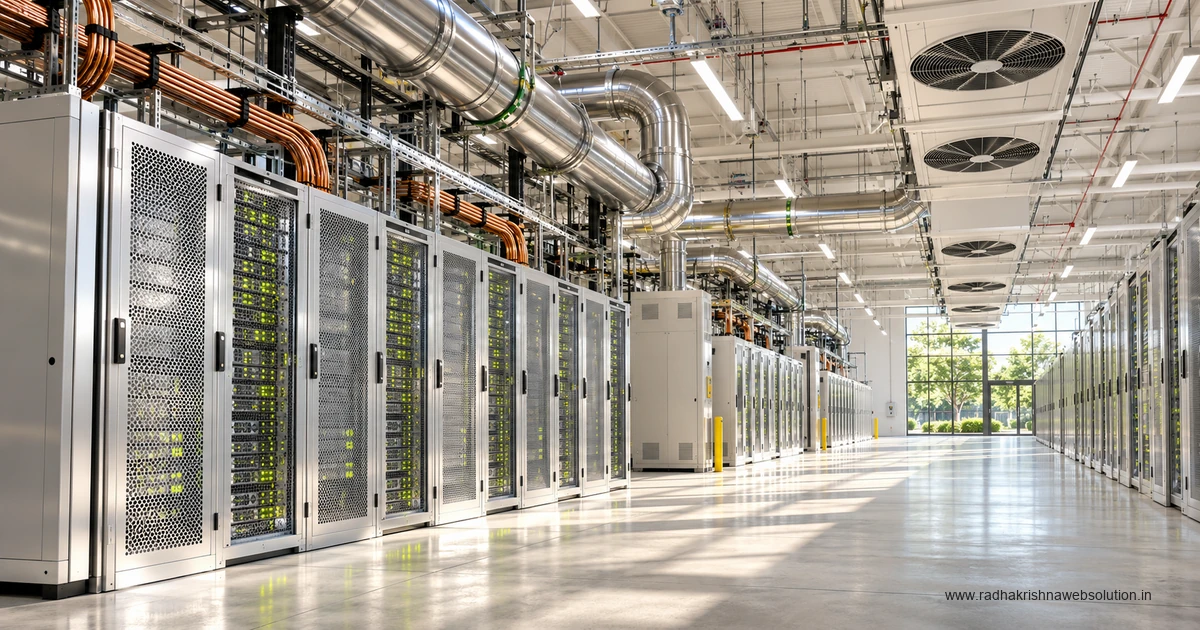
“AI factory” is NVIDIA's term for a large integrated computing environment that turns electricity, data and software workloads into trained models and inference outputs. The metaphor draws attention to throughput, reliability and total operating cost. An AI factory is not a standardised accounting category; two vendors can use the term for significantly different facilities.
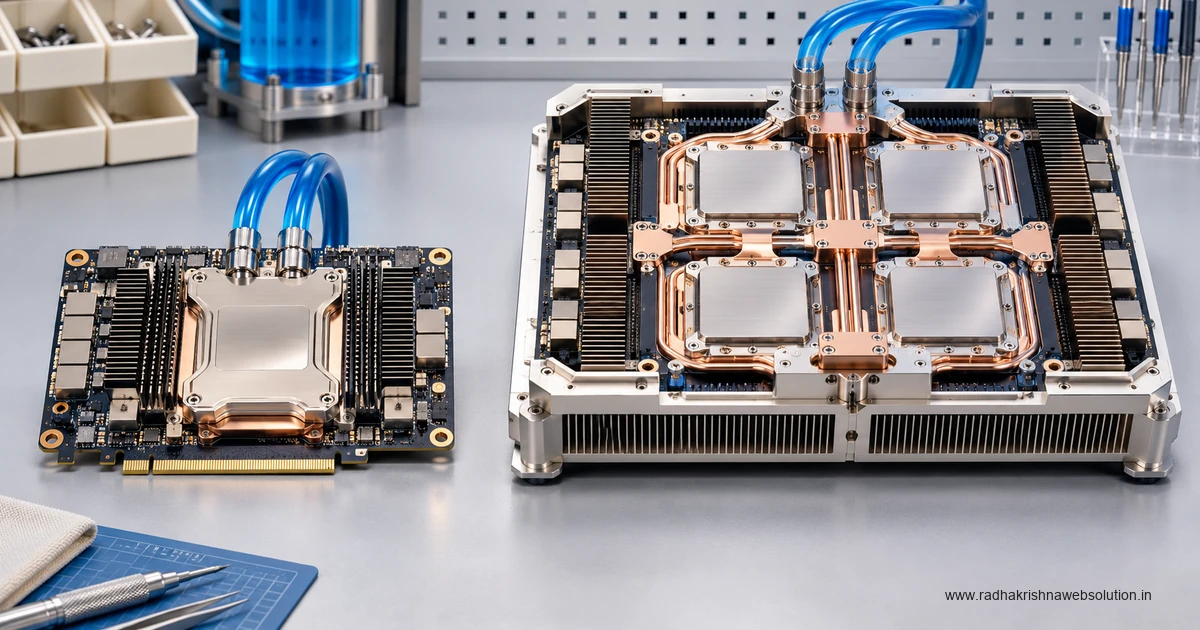
A practical AI deployment might include GPU compute racks, CPU orchestration, high-speed networking, storage, distributed-training software, containerised applications, monitoring and cooling systems. Depending on the workload, the limiting resource could be GPU memory, network bandwidth, storage throughput, facility power or human engineering capacity.
How does NVIDIA make money from AI infrastructure?
NVIDIA reports revenue by business lines and provides additional disclosures in its investor materials. Data-centre revenue is a major part of its recent growth. The commercial stack reaches beyond individual processors: enterprise customers purchase servers, integrate cloud services or consume accelerators as a hosted service through a separate cloud provider. NVIDIA may sell hardware to the infrastructure operator rather than directly bill every end user who runs an AI request.
| Layer | Example value delivered | Buyer consideration |
|---|---|---|
| GPU and CPU hardware | Compute and orchestration | Capacity, supply and performance |
| Networking and switching | Fast cluster communication | Compatibility, topology and resilience |
| Rack-scale systems | Integrated AI platform | Facilities, cooling and installation |
| Software and optimisation | Development and deployment tooling | Licensing, version support and productivity |
| Partner ecosystem | Cloud access and application integrations | Pricing, data location and service terms |
For technical background on the hardware, see our Blackwell versus Vera Rubin platform guide; for the software layer, see CUDA and developer tools.
Revenue, operating profit and capital expenditure are not interchangeable
A cloud company announcing a multibillion-dollar data-centre buildout does not mean NVIDIA immediately books that entire amount as revenue. The budget can cover land, power, construction, cooling, networking, storage, servers and services from multiple suppliers. Orders can be scheduled over years, contingent on delivery or changed. Likewise, NVIDIA reporting revenue does not mean an end customer's AI service has reached profitability.
The correct source for NVIDIA's historical reported financial results is NVIDIA investor relations and SEC filings. Those filings define period-specific revenue, gross margin, cash flow, inventory and concentration risks. Use the report's fiscal period and publication date when quoting any number.
Why cloud providers buy NVIDIA systems
Hyperscale clouds compete to supply AI capacity to customers that train, fine-tune and serve models. They may acquire NVIDIA hardware, build custom accelerators or rent specialised GPU facilities. NVIDIA's system-level advantages can reduce adoption time for software already built around CUDA; the downsides can include high cost, power requirements and vendor dependence.
Customer needs are heterogeneous. A frontier-model lab training a huge system may demand a tightly integrated, multi-rack cluster. A small business running a modest AI assistant may only need a hosted API and never handle an accelerator directly. Our Google Cloud model-hosting guide shows why developers should evaluate the offered model service separately from the underlying chip vendor.
What should enterprise buyers measure?
Enterprises should quantify cost per useful output rather than only cloud price per GPU hour. A very fast accelerator can be expensive if capacity is reserved but unused; a cheaper one can be expensive if it fails deadlines or requires substantial porting. Track token throughput under realistic concurrency, model quality, uptime, data-governance requirements, infrastructure overhead and engineering hours.
For systems that act autonomously, governance and reliability are also business costs. Our production AI agent governance article explains access controls, human review and accountability, while our agent monitoring guide covers metrics and troubleshooting.
Competition from AMD, TPUs and custom silicon
NVIDIA's position is significant, but AI infrastructure is not a one-vendor market. AMD's Instinct hardware and ROCm software offer one route, while Google's TPUs and other custom processors target particular economics and workloads. Not every alternative matches CUDA applications one-for-one. Buyers should perform compatibility, performance and support testing on the models they actually use.
RKWS previously covered a concrete India-oriented alternative in Vultr's announced AMD AI supercluster in Chennai. The key is distinguishing vendor-announced capacity plans from infrastructure already provisioned and available to customers.
Major business risks for NVIDIA in 2026
Customer concentration and changing investment cycles
Large cloud and AI buyers account for significant demand. If they slow capital spending, change accelerator vendors or improve hardware utilisation faster than demand grows, order patterns can change. This is a scenario to monitor, not proof of an actual decline.
Export controls and geopolitics
US licensing restrictions and market-access rules can affect which chips are sold to which customers and regions. Policy changes can alter product mixes and development costs. See our NVIDIA China and export-controls explainer.
Manufacturing and system supply
Advanced processors depend on foundry capacity, packaging, high-bandwidth memory, networking equipment and deployment facilities. A delay in one dependency can affect a whole installation. Customers should verify delivery timelines and service levels rather than assume an announced chip means immediate deployment.
Technology transitions
Each new architecture needs mature software, field validation and customer adoption. Promised improvements must be tested with real workloads. Overlapping Blackwell and Vera Rubin deployments can create procurement choices and migration costs.
Corporate governance and management succession
NVIDIA confirmed on 12 November 2026 that Huang had resigned and Colette Kress would serve as interim CEO. The company says it expects roadmap continuity, but investors and customers should monitor the permanent successor search and any subsequent official updates. Governance risk is different from evidence of a product defect.
What to watch on 17 November 2026
NVIDIA scheduled its fiscal third-quarter 2027 earnings announcement for 17 November 2026. At the 12 November verification date, those results are still in the future. Readers should look for disclosed revenue by segment, management guidance, gross margins, supply statements, major customer developments and any succession commentary. Forecasts and analyst estimates should be explicitly attributed rather than presented as actual reported results.
India's opportunity in AI infrastructure
Indian developers and firms can benefit from growing access to hosted AI models, cloud computing regions and specialised data centres, but geography does not guarantee compliance, low latency or cheap GPU capacity. Compare domestic and international offers with real benchmarks and clear contractual terms. The decision is often between consuming a cloud API, renting accelerators or investing in infrastructure, not between two GPU names on a spec sheet.
Official sources and additional reading
- NVIDIA investor relations
- NVIDIA data centre platforms
- NVIDIA SEC filings
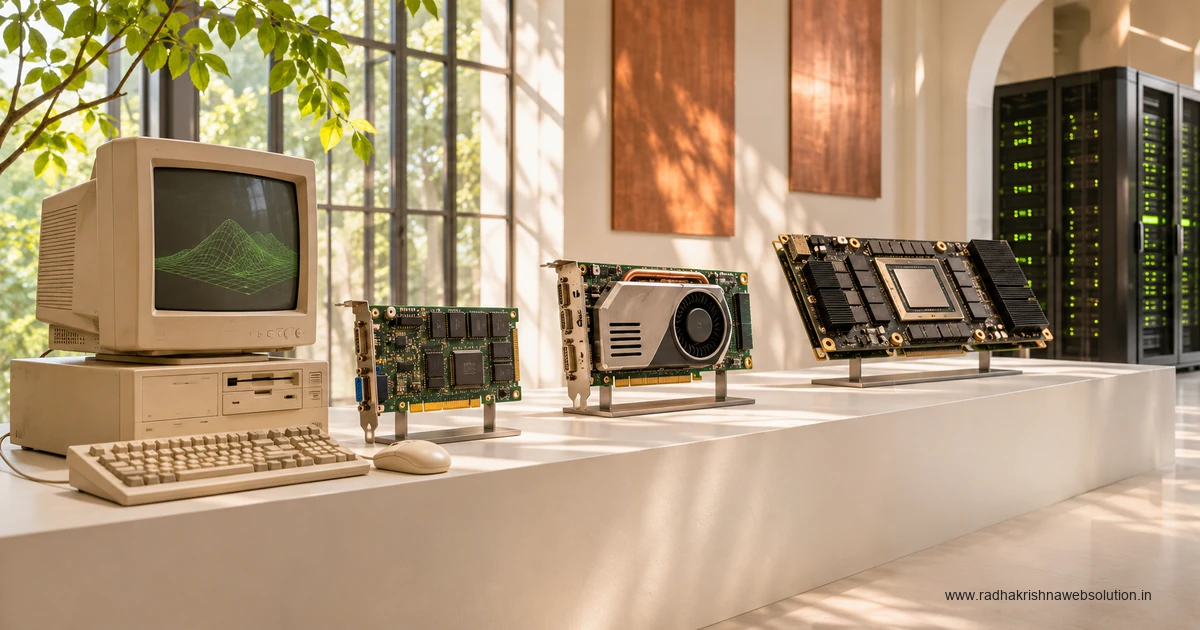
- NVIDIA's evolution from graphics to AI
Research reviewed 12 November 2026. No future earnings results, purchase-order values or deployment capacity have been invented. Independent analysis, not investment advice.
Frequently asked questions
What is an NVIDIA AI factory?
NVIDIA uses the term for integrated infrastructure that trains and serves AI models, involving accelerators, networking, software and data-centre facilities.
Is NVIDIA's data-centre revenue the same as profit?
No. Revenue, margin, cash flow and customer capital spending are different measures; financial reports should be read separately.
When is NVIDIA's next earnings report after November 12, 2026?
NVIDIA scheduled fiscal third-quarter 2027 results for November 17, 2026.
Does the CEO resignation prove demand is falling?
No. Leadership changes can affect confidence or execution, but demand must be assessed from reported orders, revenue, guidance and customer deployment evidence.