A zero-click search strategy recognises that some users get the information they need on a results page. Make your business details and explanations accurate, strengthen relevant local and brand visibility and offer reasons to visit when more detail is needed. Measure qualified enquiries and customer actions alongside website clicks.
2026 reporting suggests most Google searches now end without anyone opening a website. That sounds like a crisis, and for publishers who live on informational traffic it is. For a business that actually sells something, it is a change in where the work happens, not the end of search. A zero click search strategy accepts that the results page is now part of your funnel and builds for it.
The goal moves from winning sessions to winning the moments that still convert: the map pack, branded searches, transactional queries, and being the source an AI answer cites. This is still ordinary search engine optimisation, done with different priorities. What changes is which pages you build, how you format them, and what you count as a result.
What is a zero click search strategy?
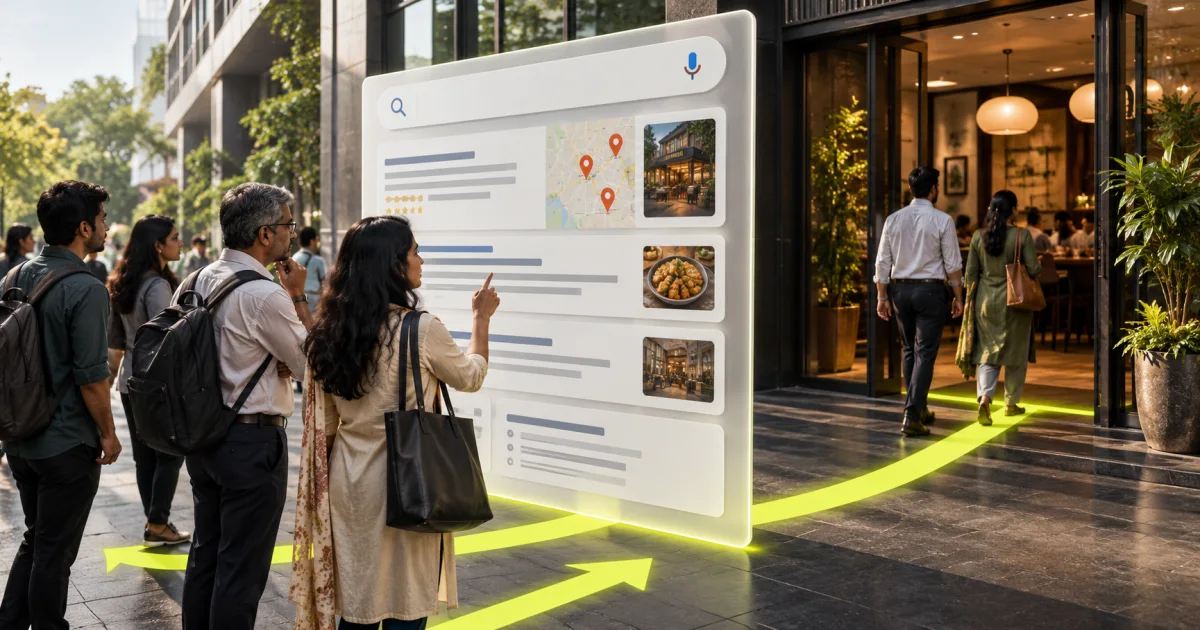
A zero click search strategy is a plan to earn value from searches that never reach your site. You answer the question inside the result, capture the intent that still clicks, and measure enquiries instead of sessions. It treats Google's answer surfaces as distribution, and your website as the place where a decision gets made.
That split matters because the two halves need different work. Visibility work makes you the source that gets summarised and quoted. Conversion work makes sure the people who do click find a price, a slot, a proof point or a booking button within seconds of landing.
How much traffic is actually at risk?
Less than the headlines suggest, and more than you think if your traffic is mostly how-to reading. 2026 reporting suggests roughly 60 to 63 percent of Google searches end without a click to an external site. Sites that never adapted have reported traffic declines of 20 to 40 percent on informational queries.
The AI layer explains most of that. Industry analyses published in 2026 report that Google AI Overviews appear in roughly 20 percent of searches, rising to about 37 percent in some countries, and in around 89 percent of brand-name search results. On some high-impression queries, reported click-through rates fell from about 1.76 percent to about 0.61 percent.
Read those numbers carefully before you panic. They are averages across every query type, and informational searches dominate the sample. If your revenue comes from people looking for a service near them, your exposure looks very different. We unpack the mechanics in our piece on what AI Overviews are doing to Indian search results.
Which searches still send clicks in 2026?
Searches where the answer cannot fit in a snippet. Price checks that depend on scope, availability and booking, comparisons with local specifics, proof such as work samples and reviews, and anything that needs a form, a call or a payment. Google can summarise a definition. It cannot quote your job or take your booking.
Indian query patterns help here. People add modifiers before they buy: near me, price, in Pune, charges, best, contact number. Each modifier signals that a summary is not enough and a decision is close. Those are the queries worth defending, and they are rarely the ones bleeding clicks.
Sort your top queries into these buckets before you change anything. The thinner the answer, the less likely the click, and the less that click was worth to you in the first place.
| Search type | Example | Still clicks? | What to do about it |
|---|---|---|---|
| Definition or how-to | what is technical seo | Rarely | Answer in under 60 words and aim to be the cited source |
| Local service intent | dentist near akurdi | Yes, mostly into the map pack | Profile completeness, review flow, consistent NAP |
| Price and cost | seo services cost in pune | Yes, ranges vary too much to summarise | Publish real ranges and the factors that move them |
| Branded | your firm name plus reviews | Yes, but a summary now sits above you | Control what Google can read about you everywhere |
| Transactional | book appointment, get a quote | Yes, and the intent is highest here | Cut friction: WhatsApp, call button, short form |
Why Indian local businesses are far less exposed
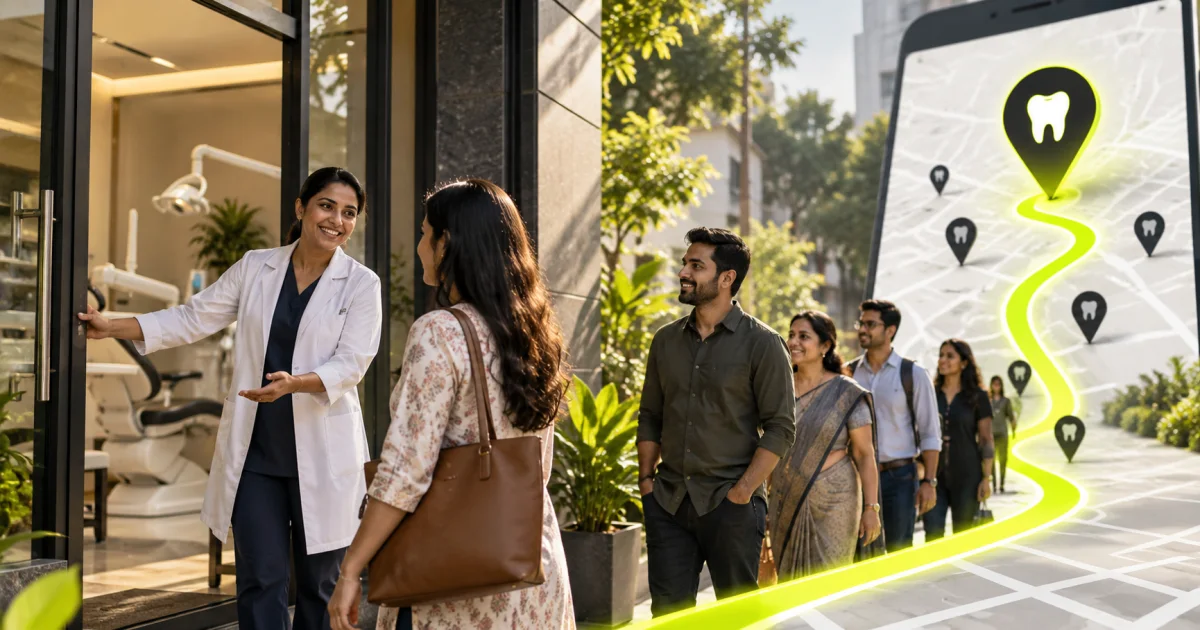
A publisher sells attention. You sell a service in a place. When someone in Wakad or Alkapuri searches for a clinic, an installer or a chartered accountant, Google's job is to hand over a shortlist with directions, hours, reviews and a call button. That result is a lead, not a lost session.
Three structural advantages sit with Indian service businesses right now.
- Local intent resolves into the map pack, where the useful click is a call or a direction request.
- Buyers still cross-check on WhatsApp, JustDial and IndiaMART before deciding, so presence beats page views.
- Price and scope in India vary so widely that no automated summary can answer safely for you.
The exposed pages are your generic explainers with no local detail, no pricing and no proof. Those were never strong lead sources. Trimming them and reinvesting the effort in service pages, location pages and real project detail is usually a net gain. The groundwork sits in our local SEO checklist built for India.
We see the same pattern in both cities we serve. Profiles, service pages and pricing pages hold steady while thin informational traffic slides. Our search team in Pune now opens every audit by splitting the query list this way, because the fix depends entirely on which bucket is losing.
Structure pages so the answer shows and the click still earns its place
The old fear was that answering a question on the results page kills your traffic. In practice, withholding the answer only means somebody else gets summarised. Give the answer freely at the top, then make the page carry what a summary cannot.
A snippet cannot hold your price ranges, your availability this week, photographs of finished work, your booking slots or your service area map. That is the reason to click, and it has to be visible fast. Apply this recipe to every commercial page you care about.
- Put a 40 to 60 word direct answer immediately under each question heading.
- Write headings as the questions people actually type, not as clever labels.
- Add one table of prices, timelines or comparisons that a snippet cannot reproduce.
- Include something proprietary: your own ranges, your process, images of real work.
- Mark the page up with organisation, service, FAQ and review schema.
- Place the booking or WhatsApp action above the fold and after every major section.
- Keep the page fast, because a click that bounces is worse than no click at all.
On 15 May 2026 Google published official guidance on optimising for generative AI search, and the direction was unsurprising: clear structure, unique information, and content that stands on its own. Our guide to answer engine and generative engine optimisation takes that further for teams who want the detail.
One warning before anyone gets clever. Google began rolling out the August 2026 Spam Update on 18 August, targeting scaled content abuse, expired domain abuse, site reputation abuse and unnatural link schemes, and it expanded the spam policy to cover attempts to manipulate AI Overviews and AI Mode. Tricks aimed at the AI layer are now explicitly inside the rules.
Own the surfaces that never needed a click
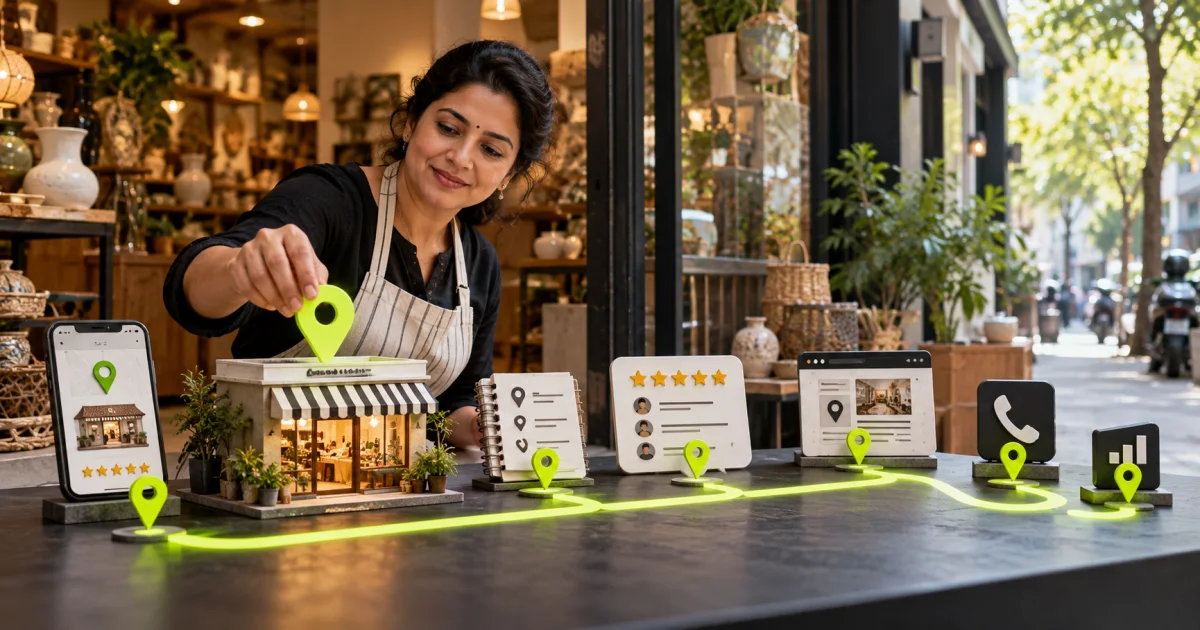
Some of the best outcomes in Indian search happen entirely inside Google. A complete profile with current hours, real photos, a full service list and a steady flow of reviews produces calls and direction requests without a session ever reaching your server. That is not lost traffic. That is the shortest funnel you will ever run.
Staff these surfaces properly instead of treating them as a one-time setup. Google Business Profile management is usually where a local plan earns its keep, and the mechanics of getting into the local map pack are well understood by now. Branded search deserves the same care, because a summary of your business is being assembled from whatever Google can read about you.
Messaging is the other click-free surface. In June 2026 Meta launched its Business Agent AI across WhatsApp, Messenger and Instagram globally, which pushes more first contact into chat rather than onto your website. If that is where your enquiries land, resource it like a channel and answer fast.
Indian WhatsApp Business Solution Providers include AiSensy, Interakt, Wati and Gallabox, in the region of Rs 1,500 to Rs 5,000 per month plus WhatsApp per-conversation charges. Pricing changes often, so check the vendor's current page before you budget. The tooling matters less than having a human reply within minutes during business hours.
Measure qualified enquiries, not sessions
Session counts are now a poor proxy for demand. A page can gain impressions, lose clicks and still increase phone calls, because it fed the summary that made someone trust you. If your dashboard only tracks traffic, this reads as failure while the business quietly improves.
Change what you report. Track calls, WhatsApp conversations, form submissions, direction requests, branded search volume and the ratio of impressions to enquiries in Search Console. Separate informational pages from commercial ones before you judge either. Then read the trend across quarters rather than weeks.
There is a good reason for that patience. 2026 reporting counted five core updates between March and August 2026, roughly every six to seven weeks, with the May 2026 update starting to roll out on 21 May and taking up to two weeks to finish. Weekly readings inside that much noise will mislead you.
At RKWS, SEO starts at ₹3,500 per month, digital marketing starts at ₹3,000 per month and Google Business Profile management starts at ₹2,000 per month. Each is a separate scope. Larger catalogues, additional locations and technical repairs require assessment, while paid media spend is separate from management fees.
Frequently asked questions
Should we stop writing blog posts if nobody clicks?
No, but change what they are for. Posts that only define a term will keep losing clicks and are worth consolidating. Posts carrying pricing, comparisons, local detail or original process notes still pull qualified visitors, and they are the ones AI answers tend to cite.
Does schema markup get you into an AI Overview?
Schema does not buy a place. It makes your content easier to parse and your business easier to identify as an entity, which helps. Clear structure, a direct answer near the top and genuine specifics do more. Nobody, including us, can guarantee inclusion or rankings.
How long before this approach shows up in enquiries?
Plan in quarters. Profile completeness and conversion fixes can move calls within a few weeks. Content restructuring and citation gains usually need two to three months to read clearly, especially in a year with core updates arriving every six to seven weeks.
Is a small business better off spending on ads instead?
Ads buy immediate demand and are worth testing on high-intent keywords. But paid traffic stops when the budget stops, while profile strength, reviews and branded presence compound. For many Indian service businesses, a modest paid budget alongside steady work on the free surfaces is the sensible balance.
Where to start this month
Pull your top queries from Search Console and sort them into the buckets in the table above. In many cases the queries losing clicks were never producing enquiries, while the queries producing enquiries hold steady. That one exercise ends most of the panic and points at the real work.
Then fix in order: profile completeness and reviews first, commercial pages second, informational content last. Add the direct answer blocks, add the table, add the proof, and put a booking action wherever a decision gets made. Accept that some sessions are gone for good, and that the enquiry line is the number that pays you.
If you would rather not run that audit alone, we will do it with you. We work with businesses across Pune and Vadodara from our Akurdi office, we run weekly checkpoints, and we reply within one business day. Tell us what you sell and where enquiries come from, then book a call with our team to see what your query mix is really saying.